SAVE BIG! FREE SHIPPING ON ALL ORDERS OVER $129! Visit Store

Author: admin

  • When Is the Best Time to Order Frozen Feeders?

    When Is the Best Time to Order Frozen Feeders?

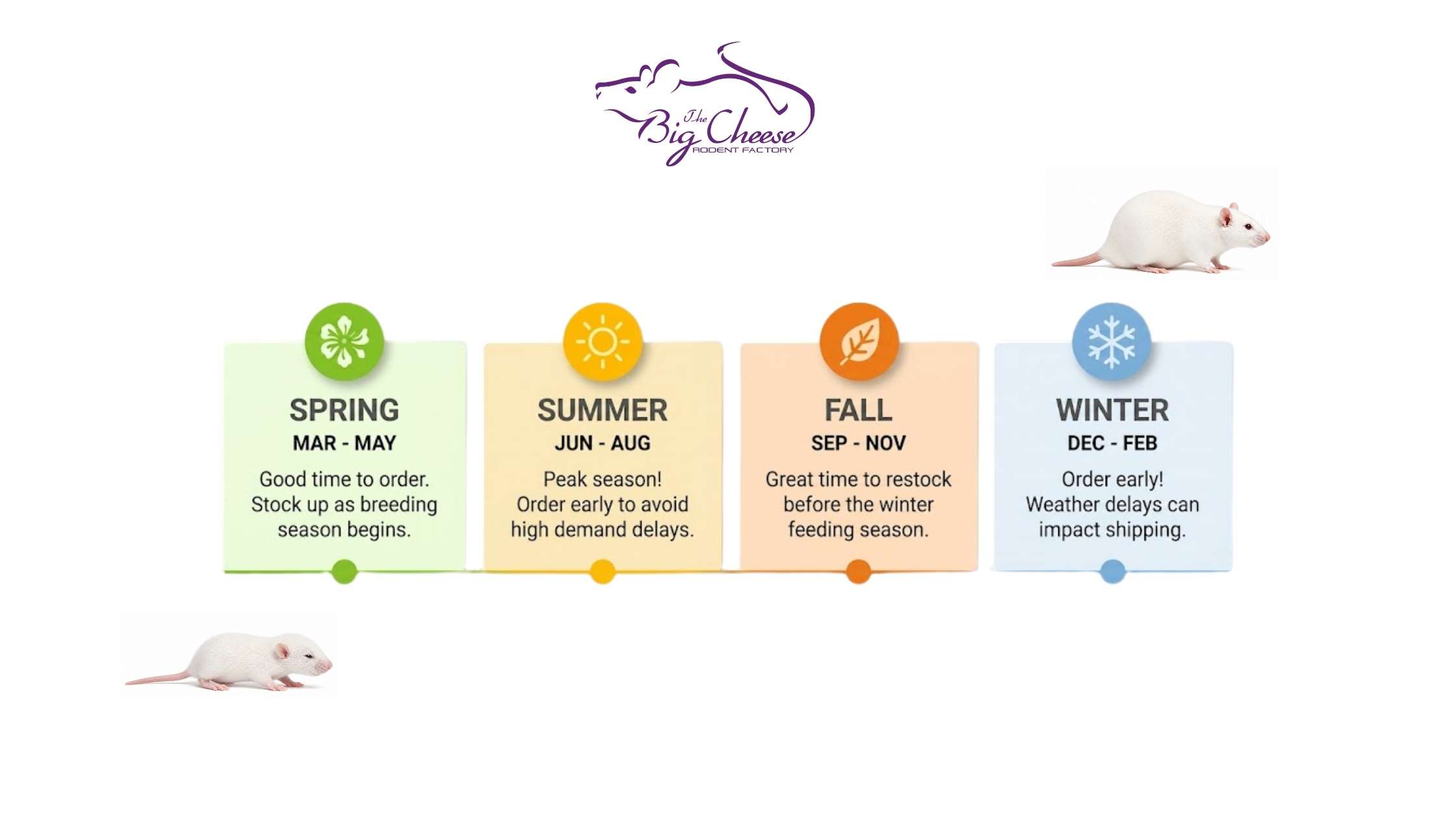
    Timing matters when ordering Frozen Feeders online. Choosing the right shipping day helps reduce transit delays, avoid weekend holds, and improve delivery reliability for perishable products like Frozen Mice and Frozen Rats. Because we ship all orders using FedEx Ground. Hence, timing matters—especially when shipping perishable products. So, planning your order around the shipping schedule can help ensure your package arrives frozen, protected, and on time.

    Below is a clear breakdown to help you decide the best day to order and what to expect.

    Our Preferred Shipping Day: Monday

    Monday is the best day to have your frozen feeders order shipped. It ensures the fastest and most reliable shipping experience.

    Shipping on Monday gives FedEx the entire workweek to deliver your package, which helps reduce delays and prevents shipments from sitting in transit over the weekend.

    • FedEx has the full workweek for delivery
    • Lower chance of weekend transit delays
    • Reduced risk of packages sitting in facilities
    • Better delivery consistency for perishable shipments

    Monday Shipping Cutoff 

    • Orders received before 8:00 AM CST on Monday will ship that same Monday.
    • This timing offers the most reliable delivery window and the lowest risk of extended transit time.

    This shipping window is ideal for:

    • Large frozen feeder orders
    • Long-distance deliveries
    • Bulk frozen mice and rat shipments
    • Warm-weather shipping

    Second Best Option: Tuesday

    If you miss the Monday cutoff, Tuesday is the next best day to ship.

    • Orders received by 1:00 PM CST on Tuesday will ship on Tuesday.
    • Tuesday shipments still have most of the workweek for delivery and are generally safe and reliable.

    Why Wednesday Shipments Are Least Desirable

    • Wednesday shipments often require weekend delivery to arrive on time.
    • FedEx does not deliver on Sundays to some parts of the country, which can cause packages to sit an extra day in a FedEx facility.
    • FedEx does not deliver to commercial (business) addresses on weekends. If your order is shipping to a business, it may be held until Monday, to reduce the risk of late delivery.
    • Large orders – $300+ – should not be shipped on Wednesday if possible.

    Special Considerations for Zone 4 States

    Some states require longer FedEx Ground transit times and may need Monday-only shipping schedules for safer delivery timing.

    Common Zone 4 States Include

    • Washington
    • Oregon
    • Maine
    • Parts of New York
    • Idaho
    • Montana

    Transit times for these destinations may range from 4–7 days depending on location and order size.

    Depending on order size and destination, these shipments may be held and shipped on Monday to avoid unnecessary delays or weekend holds.

    Quick Frozen Feeder Shipping Summary

    • Best day to order: Monday (before 8:00 AM CST)
    • Next best option: Tuesday (before 1:00 PM CST)
    • Avoid if possible: Wednesday shipments
    • Zone 4 states: May require Monday-only shipping due to longer transit times

    Tips for Faster Frozen Feeder Delivery

    • Order early in the week
    • Avoid holiday shipping periods
    • Use residential delivery addresses when possible
    • Monitor tracking updates after shipment
    • Plan ahead during summer weather

    Proper scheduling helps improve frozen delivery reliability for:

    If you plan your order with these guidelines in mind, you’ll get faster, more reliable delivery and the best overall shipping experience. If you ever have questions about timing or your specific location, feel free to reach out—we’re happy to help

  • How to Safely Thaw Frozen Mice & Frozen Rats for Reptile Feeding?

    How to Safely Thaw Frozen Mice & Frozen Rats for Reptile Feeding?

    Properly thawing Frozen Mice and Frozen Rats is essential for safe reptile feeding. Incorrect thawing methods can increase bacterial growth, damage prey quality and nutritions, and create unsafe feeding conditions like burned/bloody meals for snakes and other reptiles. It can injure or sicken your animal, too.

    This guide explains how to safely defrost frozen feeder rodents, warm prey correctly, avoid common mistakes, and maintain proper hygiene during feeding. 

    Quick Guide: Safe Frozen Feeders Thawing

    For the safest reptile feeding process: 

    • Plan ahead: move prey from freezer → refrigerator to thaw slowly whenever possible.
    • Never thaw in the vacuum bag without opening first: Thawing while the prey is under a vacuum condition will cause the prey to bleed.
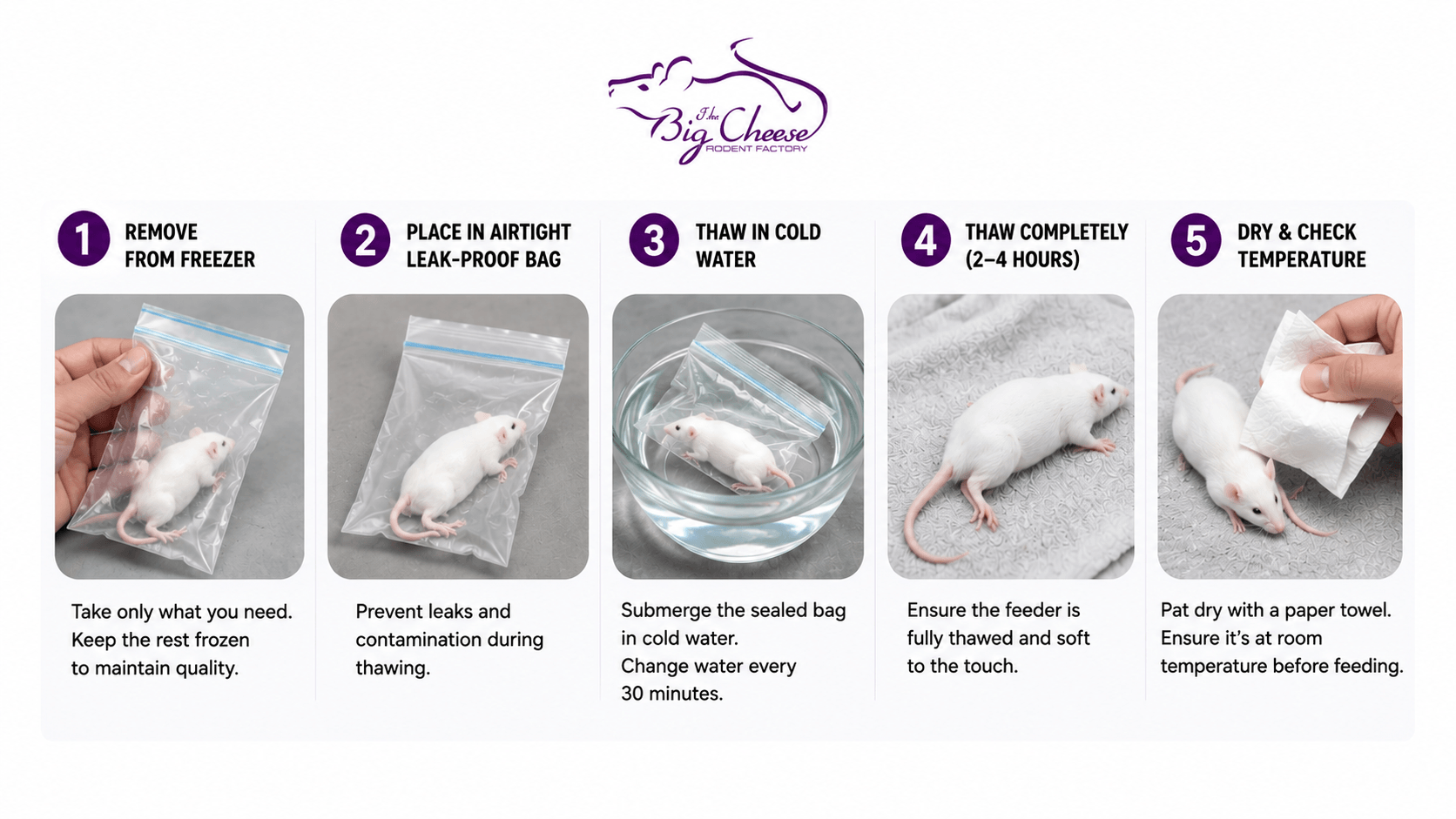
    • Use sealed bags: never expose prey directly to water. Use a zip lock bag if possible.
    • Keep temps safe: thaw in the fridge, then warm in a sealed bag in warm water to (98–100°F) just before feeding.
    • Do not refreeze once thawed, never refreeze
    • Practice hygiene: wash hands, sanitize surfaces, and avoid cross-contamination.

    Using proper thawing techniques helps preserve nutritional quality while reducing bacterial contamination risk. 

    Why Proper Thawing Techniques Matter

    Correct thawing protects both reptiles and keepers. Improperly thawed Frozen Feeders may:

    • Develop harmful bacteria
    • Lose nutritional quality
    • Create uneven hot spots
    • Rupture or bleed excessively
    • Become unsafe for reptiles
    • Practice hygiene: wash hands, sanitize surfaces, and avoid cross-contamination.

    On the other hand, slow thawing helps maintain prey quality and reduces spoilage risk, including:

    • Slow, cold thawing (in the fridge) minimizes bacterial growth.
    • Room-temperature or warm-water thawing can let bacteria multiply if it takes too long.
    • Never use the microwave: Microwave thawing creates hot spots that can burn your reptile and can spoil nutritional quality.
    • Feeding too-cold prey can shock ectothermic animals and reduce digestion.

    Safe Way to Thaw Frozen Mice & Rats 

    1) Refrigerator Thawing (Recommended)

    Refrigerator thawing is the safest and most reliable method for thawing frozen feeder rodents.

    How to Thaw Properly?

    • Move the frozen prey from the freezer to the refrigerator (32–40°F) still sealed in its packaging or a sealed bag.
    • Time estimates (approximate):
      • Hopper mice: 6–12 hours (often overnight).
      • Adult/jumbo mice: 12–24 hours.
      • Small rats: 24 hours.
      • Medium/large rats: 24–48 hours (sometimes longer).
    • Once fully thawed, keep refrigerated and use within 24 hours for best safety. Do not freeze.

    2) Cold Water Thawing for Faster Feeding 

    If faster thawing is needed:

    • Keep prey sealed inside a leak-proof bag
    • Submerge in cold water
    • Replace water every 20–30 minutes

    Estimated Times

    • Small prey: 30–60 minutes
    • Large prey: Several hours

    After cold-water thawing:

    • Feed immediately
    • Do not refrigerate again
    • Never refreeze

    3) Warm Water Bath For Warming (Not Long-term Thawing)

    • Use this to bring already-thawed prey up to feeding temperature (see warming section below).
    • Keep the prey in its sealed bag and submerge in warm (not hot) water. Monitor with a thermometer.

    DO NOT:

    • Thaw at room temperature on the counter for extended periods (>2 hours).
    • Do not use the microwave. It can cause uneven heating and dangerous hot spots within the prey. It can cook the outside of the prey while leaving other sections frozen.

    Warming The Frozen Feeders To Feeding Temperature (Important)

    Reptiles prefer prey that is near their typical body/ambient temperature. As a safe, general target, warm prey to around  (98–100°F).
    How to warm:

    1: Place the sealed bag into a bowl of warm tap water (not scalding).

    2: Let sit and check temp after a few minutes. Small prey may take 5–10 minutes, larger prey will take longer.

    3: Remove when the core temperature reaches ~98F.

    4: Dry the exterior of the bag with a paper towel, open the bag, and present to your reptile.

    Why 98F? It approximates a warm prey item that stimulates feeding and avoids chilling the reptile. Don’t exceed 105°F) — higher temperatures can denature proteins or create hot spots that burn.

    Safe Frozen Feeder Feeding Process (Step-by-Step)

    1: Ensure prey is fully thawed (no ice crystals inside).

    2: Warm to feeding temp as described.

    3: Use tongs or gloves to offer prey (avoid hand feeding for safety).

    4: Observe the animal eating — if it rejects, do not force. If unused, discard (do not re-refrigerate for later).

    Note: Never leave thawed prey inside the enclosure for extended periods. 

    Storage Rules & Timelines

    • Keep frozen prey at constant freezer temps until use. Avoid repeated thaw/refreeze cycles.
    • Fridge after thawing: Use within 24 hours (conservative and safe).
    • Cold-water thaw: feed immediately, do not refrigerate for later.
    • Never refreeze once fully thawed. Refreezing increases bacterial risk and reduces nutritional quality.

    Hygiene & Safe Handling Tips

    • As with any meat product frozen rodents can carry bacteria— always practice safe handling.
    • Wash hands thoroughly with soap and hot water before and after handling prey.
    • Wear disposable gloves if possible.
    • Clean and disinfect any surfaces, bowls, tongs, or containers that contact the prey.

    Final Thoughts on Thawing Frozen Feeders

    Correctly thawing Frozen Mice and Frozen Rats helps protect reptile health while preserving prey quality and nutrition. Slow refrigerator thawing, safe warming temperatures, and proper hygiene are the best practices for safe reptile feeding.