SAVE BIG! FREE SHIPPING ON ALL ORDERS OVER $129! Visit Store

Category: Uncategorized

  • Choosing the Best Shipping Day for Frozen Feeder Orders

    Choosing the Best Shipping Day for Frozen Feeder Orders

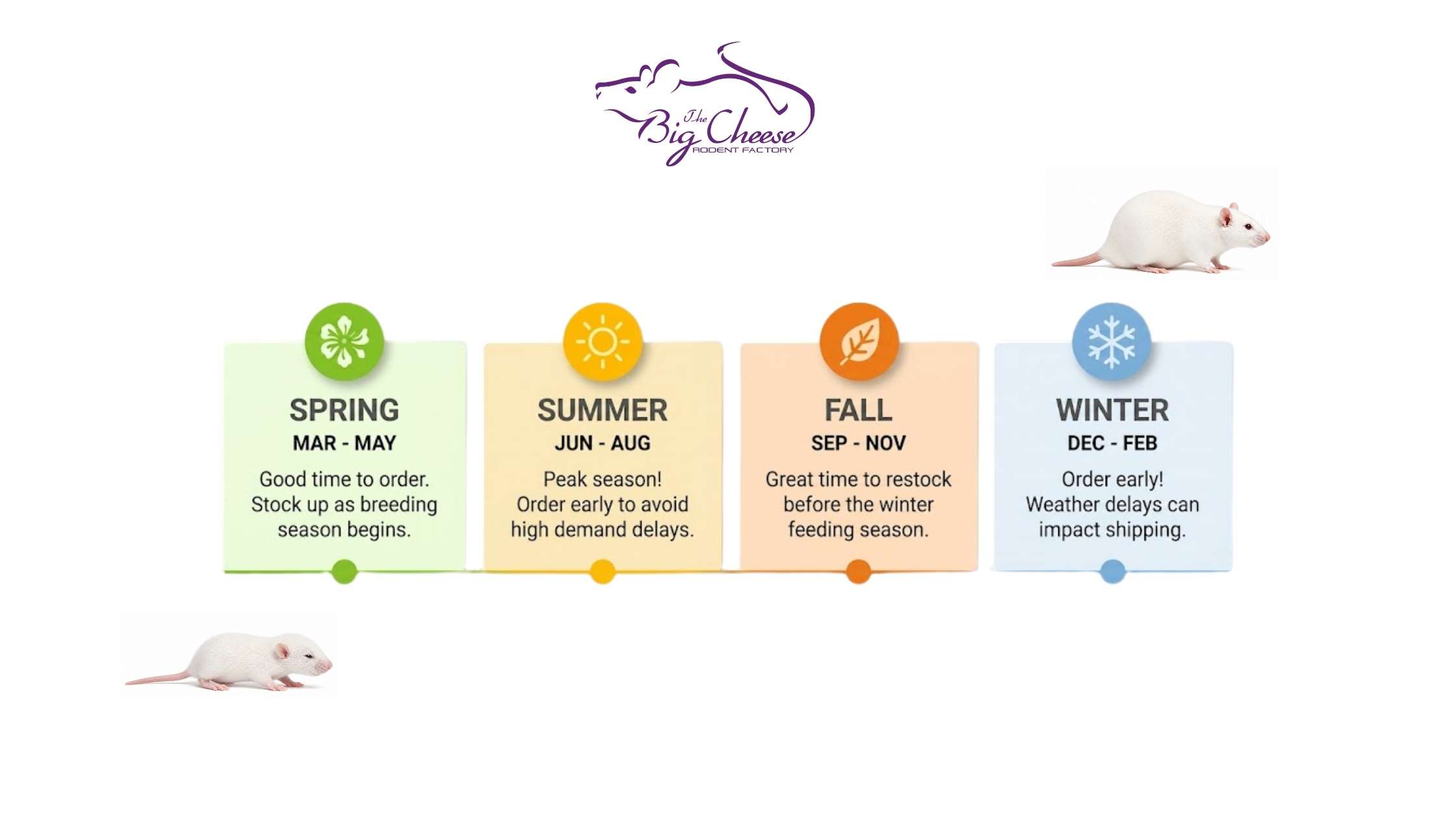
    Timing matters when ordering frozen feeders online. Choosing the right shipping day helps reduce transit delays, avoid weekend holds, and improve delivery reliability for frozen mice, rats, rabbits, quail, and day-old chicks.

    Because all orders are shipped using FedEx Ground, proper scheduling helps ensure your order arrives frozen, protected, and in excellent condition.

    Recommended Shipping Days: Monday and Tuesday

    For most customers, Monday and Tuesday are equally reliable shipping days and are strongly recommended for frozen feeder orders.

    Both shipping days provide FedEx with ample time during the workweek to complete delivery while minimizing the risk of weekend-related delays.

    Monday Shipping Cutoff

    Orders received before 8:00 AM CST on Monday will ship the same day.

    Tuesday Shipping Cutoff

    Orders received before 1:00 PM CST on Tuesday will ship the same day.

    Benefits of Monday and Tuesday Shipping

    • Lower risk of transit delays
    • Reduced chance of weekend holds
    • More consistent delivery performance
    • Ideal for perishable shipments
    • Recommended for large orders and long-distance deliveries

    For most destinations, customers can expect similar delivery reliability whether their order ships on Monday or Tuesday.

    Wednesday Shipping: Good for Small Orders, Not Recommended for Large Orders

    Wednesday shipments are often a good option for smaller orders, especially when shipping to nearby locations with shorter transit times.

    However, Wednesday shipping is generally not recommended for larger orders valued at $250 or more.

    Large orders typically contain more product and represent a greater investment, making transit time more important. Wednesday shipments may require weekend delivery to arrive on schedule, which can create additional risk if delays occur.

    Important considerations include:

    • Some Wednesday shipments require Saturday delivery.
    • FedEx does not deliver on Sundays to some areas
    • FedEx does not delivery to Commercial (business) addresses on Weekends
    • Unexpected delays can result in additional transit time.

    For these reasons, we strongly recommend that orders over $250 ship on Monday or Tuesday whenever possible.

    Longer Transit Areas

    Certain destinations require longer FedEx Ground transit times and may be limited to Monday shipping schedules.

    Examples include:

    • Washington
    • Oregon
    • Maine
    • Parts of New York
    • Idaho
    • Montana

    Transit times to these locations may range from 4–7 days, depending on destination and order size.

    To improve delivery success, some shipments may be held for Monday departure rather than shipping later in the week.

    Quick Shipping Summary

    Best shipping days: Monday and Tuesday

    Monday cutoff: 8:00 AM CST

    Tuesday cutoff: 1:00 PM CST

    Wednesday cutoff: 1:00 PM CST

    Wednesday: Suitable for many smaller orders, but not recommended for orders over $250

    Long-transit destinations: May require Monday-only shipping

    Tips for the Best Delivery Experience

    • Order early in the week
    • Avoid holiday shipping periods when possible
    • Use a residential delivery address when available
    • Monitor tracking information after shipment
    • Plan ahead during periods of extreme weather

    Following these guidelines helps maximize delivery reliability for frozen feeder mice, rats, rabbits, quail, and day-old chicks.

    If you have questions about shipping schedules or your location, our team is always happy to help determine the best shipping option for your order.

  • How to Safely Thaw Frozen Mice & Frozen Rats for Reptile Feeding?

    How to Safely Thaw Frozen Mice & Frozen Rats for Reptile Feeding?

    Properly thawing Frozen Mice and Frozen Rats is essential for safe reptile feeding. Incorrect thawing methods can increase bacterial growth, damage prey quality and nutritions, and create unsafe feeding conditions like burned/bloody meals for snakes and other reptiles. It can injure or sicken your animal, too.

    This guide explains how to safely defrost frozen feeder rodents, warm prey correctly, avoid common mistakes, and maintain proper hygiene during feeding. 

    Quick Guide: Safe Frozen Feeders Thawing

    For the safest reptile feeding process: 

    • Plan ahead: move prey from freezer → refrigerator to thaw slowly whenever possible.
    • Never thaw in the vacuum bag without opening first: Thawing while the prey is under a vacuum condition will cause the prey to bleed.
    • Use sealed bags: never expose prey directly to water. Use a zip lock bag if possible.
    • Keep temps safe: thaw in the fridge, then warm in a sealed bag in warm water to (98–100°F) just before feeding.
    • Do not refreeze once thawed, never refreeze
    • Practice hygiene: wash hands, sanitize surfaces, and avoid cross-contamination.

    Using proper thawing techniques helps preserve nutritional quality while reducing bacterial contamination risk. 

    Why Proper Thawing Techniques Matter

    Correct thawing protects both reptiles and keepers. Improperly thawed Frozen Feeders may:

    • Develop harmful bacteria
    • Lose nutritional quality
    • Create uneven hot spots
    • Rupture or bleed excessively
    • Become unsafe for reptiles
    • Practice hygiene: wash hands, sanitize surfaces, and avoid cross-contamination.

    On the other hand, slow thawing helps maintain prey quality and reduces spoilage risk, including:

    • Slow, cold thawing (in the fridge) minimizes bacterial growth.
    • Room-temperature or warm-water thawing can let bacteria multiply if it takes too long.
    • Never use the microwave: Microwave thawing creates hot spots that can burn your reptile and can spoil nutritional quality.
    • Feeding too-cold prey can shock ectothermic animals and reduce digestion.

    Safe Way to Thaw Frozen Mice & Rats 

    1) Refrigerator Thawing (Recommended)

    Refrigerator thawing is the safest and most reliable method for thawing frozen feeder rodents.

    How to Thaw Properly?

    • Move the frozen prey from the freezer to the refrigerator (32–40°F) still sealed in its packaging or a sealed bag.
    • Time estimates (approximate):
      • Hopper mice: 6–12 hours (often overnight).
      • Adult/jumbo mice: 12–24 hours.
      • Small rats: 24 hours.
      • Medium/large rats: 24–48 hours (sometimes longer).
    • Once fully thawed, keep refrigerated and use within 24 hours for best safety. Do not freeze.

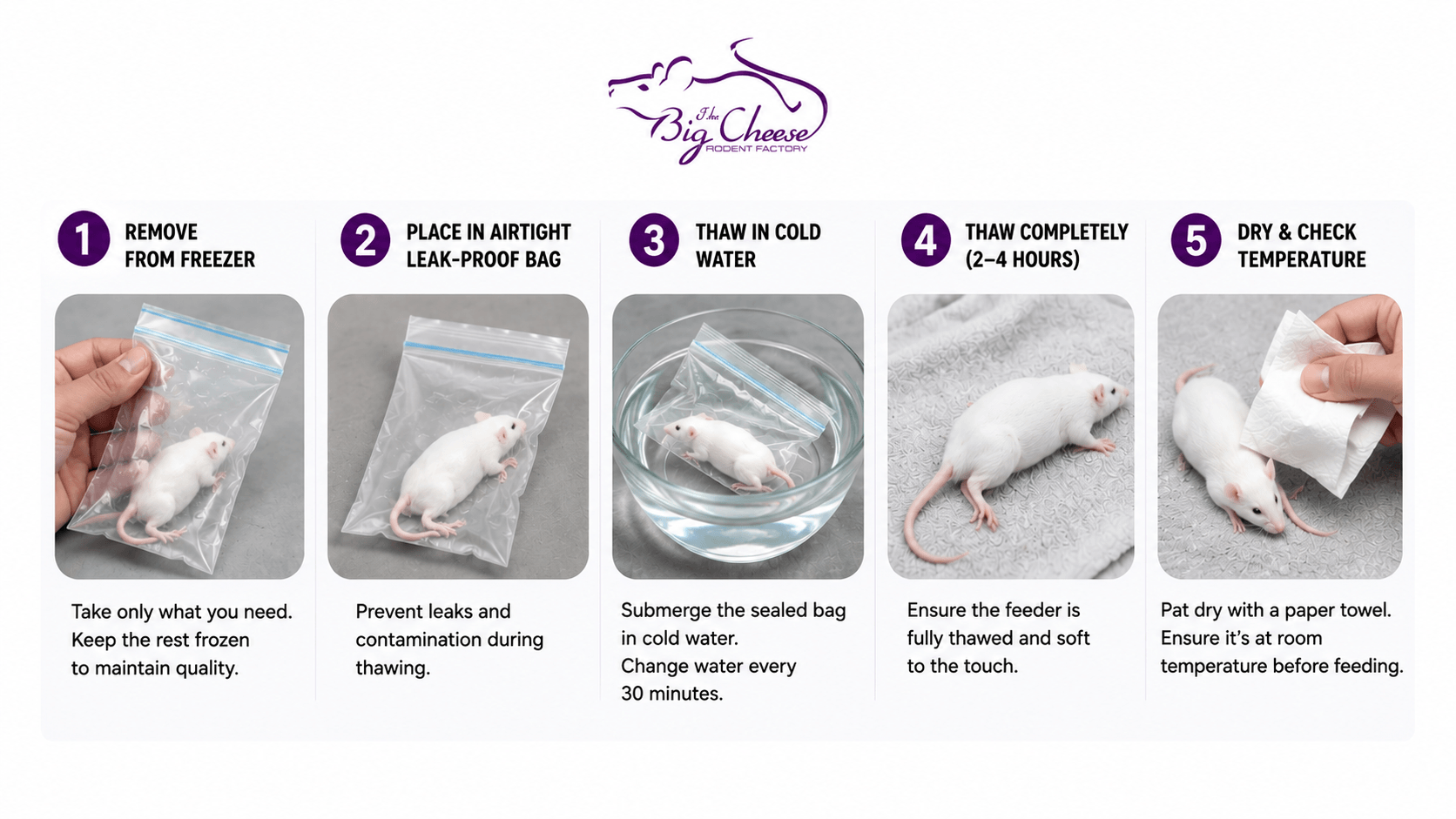
    2) Cold Water Thawing for Faster Feeding 

    If faster thawing is needed:

    • Keep prey sealed inside a leak-proof bag
    • Submerge in cold water
    • Replace water every 20–30 minutes

    Estimated Times

    • Small prey: 30–60 minutes
    • Large prey: Several hours

    After cold-water thawing:

    • Feed immediately
    • Do not refrigerate again
    • Never refreeze

    3) Warm Water Bath For Warming (Not Long-term Thawing)

    • Use this to bring already-thawed prey up to feeding temperature (see warming section below).
    • Keep the prey in its sealed bag and submerge in warm (not hot) water. Monitor with a thermometer.

    DO NOT:

    • Thaw at room temperature on the counter for extended periods (>2 hours).
    • Do not use the microwave. It can cause uneven heating and dangerous hot spots within the prey. It can cook the outside of the prey while leaving other sections frozen.

    Warming The Frozen Feeders To Feeding Temperature (Important)

    Reptiles prefer prey that is near their typical body/ambient temperature. As a safe, general target, warm prey to around  (98–100°F).
    How to warm:

    1: Place the sealed bag into a bowl of warm tap water (not scalding).

    2: Let sit and check temp after a few minutes. Small prey may take 5–10 minutes, larger prey will take longer.

    3: Remove when the core temperature reaches ~98F.

    4: Dry the exterior of the bag with a paper towel, open the bag, and present to your reptile.

    Why 98F? It approximates a warm prey item that stimulates feeding and avoids chilling the reptile. Don’t exceed 105°F) — higher temperatures can denature proteins or create hot spots that burn.

    Safe Frozen Feeder Feeding Process (Step-by-Step)

    1: Ensure prey is fully thawed (no ice crystals inside).

    2: Warm to feeding temp as described.

    3: Use tongs or gloves to offer prey (avoid hand feeding for safety).

    4: Observe the animal eating — if it rejects, do not force. If unused, discard (do not re-refrigerate for later).

    Note: Never leave thawed prey inside the enclosure for extended periods. 

    Storage Rules & Timelines

    • Keep frozen prey at constant freezer temps until use. Avoid repeated thaw/refreeze cycles.
    • Fridge after thawing: Use within 24 hours (conservative and safe).
    • Cold-water thaw: feed immediately, do not refrigerate for later.
    • Never refreeze once fully thawed. Refreezing increases bacterial risk and reduces nutritional quality.

    Hygiene & Safe Handling Tips

    • As with any meat product frozen rodents can carry bacteria— always practice safe handling.
    • Wash hands thoroughly with soap and hot water before and after handling prey.
    • Wear disposable gloves if possible.
    • Clean and disinfect any surfaces, bowls, tongs, or containers that contact the prey.

    Final Thoughts on Thawing Frozen Feeders

    Correctly thawing Frozen Mice and Frozen Rats helps protect reptile health while preserving prey quality and nutrition. Slow refrigerator thawing, safe warming temperatures, and proper hygiene are the best practices for safe reptile feeding.

  • Frozen Feeder Animal Safety Guide: Storage, Handling & Thawing Best Practices

    Frozen Feeder Animal Safety Guide: Storage, Handling & Thawing Best Practices

    Many captive carnivorous and omnivorous animals are routinely fed frozen or thawed foods, such as meat, meat-based products, and whole prey items. Since the availability of food is crucial for captive animals, most purchases are made in bulk, requiring items to remain frozen and stored until use.

    Given the perishable nature of meat, proper storage, handling, and thawing of frozen feeder animals are essential for maintaining nutritional quality, preventing contamination, and protecting both animal and human health. Whether you feed frozen feeder mice, frozen rats, day-old chicks, quail, rabbits, or other whole-prey items, following proper food safety procedures helps ensure safe and successful feeding.

    Proper Storage of Frozen Feeder Animals

    Frozen feeder animals are perishable food products. Once a frozen food shipment has been received, it should be immediately inspected and stored in the freezer. Improper storage or handling can affect:

    • Nutritional quality
    • Food safety
    • Animal health
    • Feeding success
    • Risk of bacterial contamination

    It is recommended that meat stored for long periods, i.e., up to a year, should be stored in a freezer with temperatures maintained at –10°F or lower. To ensure freshness, always use food items on a first-in, first-out basis. Using proper frozen feeder handling practices helps preserve freshness while reducing the risk of illness for both animals and caretakers.

    Frozen Feeder Safety: Protecting Yourself from Contamination

    Frozen animal food can carry germs that can make people sick. Freezing does not always kill these germs. Avoid handling frozen animal food if you are at greater risk of serious illness.

    Frozen Feeders Can Carry Bacteria

    Like raw meat products, frozen feeder animals may contain bacteria that can cause illness in people. It is important to understand that freezing does not eliminate all germs. Extra caution should be used by:

    • Children 5 years old or younger
    • Pregnant women
    • Individuals with weakened immune systems

    These groups have a higher risk of serious illness from bacterial exposure.

    Personal Protective Equipment (PPE) Recommendations

    When handling frozen feeder animals, consider using:

    • Disposable latex gloves
    • Nitrile gloves
    • Protective masks when appropriate

    Using protective equipment helps reduce direct exposure during handling and cleanup.

    Hand Washing & Sanitation Procedures

    Always wash your hands immediately after:

    • Handling frozen feeders
    • Touching packaging
    • Cleaning feeding equipment
    • Contact with thawing containers

    After washing and drying your hands, an alcohol-based hand sanitizer may provide additional protection.

    Cleaning and Sanitizing Feeding Equipment

    All equipment used for feeding should be cleaned and disinfected after every use, including:

    • Feeding tongs
    • Forceps
    • Feeding bowls
    • Storage containers
    • Tables and work surfaces
    • Feeding stations

    Sanitize by:

    • Washing with hot water of 180°F or higher utilizing soap or detergent, or
    • Washing all soiled surfaces with a detergent solution, followed by a final sanitizing rinse of 1 part bleach to 9 parts water

    Never Handle Frozen Feeders Around Human Food

    Frozen feeder animals should always be kept separate from food intended for human consumption.

    Avoid:

    • Kitchen sinks
    • Food preparation counters
    • Dining areas
    • Refrigerators that are used for human food, whenever possible

    Never:

    • Eat
    • Drink
    • Smoke

    while handling frozen feeder products.

    The Safest Way to Thaw Frozen Feeders

    The thawing process is crucial to the product’s final quality. The safest and most preferable way to thaw frozen animal food is in a refrigerated space at 40°F.

    Frozen animal food should not be thawed by exposure to excessive heat, such as:

    • Microwaves
    • Hot water

    Never use the kitchen sink, food preparation areas, or direct heat sources to thaw frozen animal food. These methods can:

    • Encourage bacterial growth
    • Damage tissue quality
    • Reduce nutritional value
    • Create uneven thawing

    Do Not Refreeze Uneaten Frozen Feeders

    If a food item is uneaten for any reason, it should be discarded.

    Do not be tempted to:

    • Refreeze uneaten items
    • Offer uneaten items to other captive animals

    This is an excellent way to transfer disease between animals.

    Frozen Feeder Handling Best Practices

    Following proper frozen feeder storage and handling procedures helps maintain nutritional quality while reducing contamination risks. Key reminders are:

    • Store frozen feeders immediately after delivery
    • Maintain freezer temperatures at –10°F or lower
    • Rotate inventory using first-in, first-out practices
    • Wash your hands thoroughly after handling
    • Sanitize feeding tools and surfaces after each use
    • Thaw only in refrigerated conditions
    • Never use a microwave or hot water for thawing
    • Never refreeze thawed or uneaten feeders

    Final Thoughts

    When an instance of contamination is reported, it is found that the victims have failed to exercise due care in their actions. Proper storage, handling, sanitation, and thawing practices help preserve the quality of frozen feeder mice, frozen rats, chicks, quail, rabbits, and other whole-prey feeders. By following these safety guidelines, you can help keep both yourself and your captive animals safe and healthy while ensuring your reptiles and carnivores receive risk-free, nutritious meals every time.

  • Dry Ice Safety Guide to Handle and Dispose of Dry Ice in Your Frozen Feeder Shipments

    Dry Ice Safety Guide to Handle and Dispose of Dry Ice in Your Frozen Feeder Shipments

    Dry ice is widely used to keep frozen feeder animals frozen during shipping. For example, our frozen feeder mice, frozen rats, frozen quail, frozen rabbits, and day-old chicks. While dry ice is extremely effective for maintaining low temperatures, it must be handled carefully after your shipment arrives.

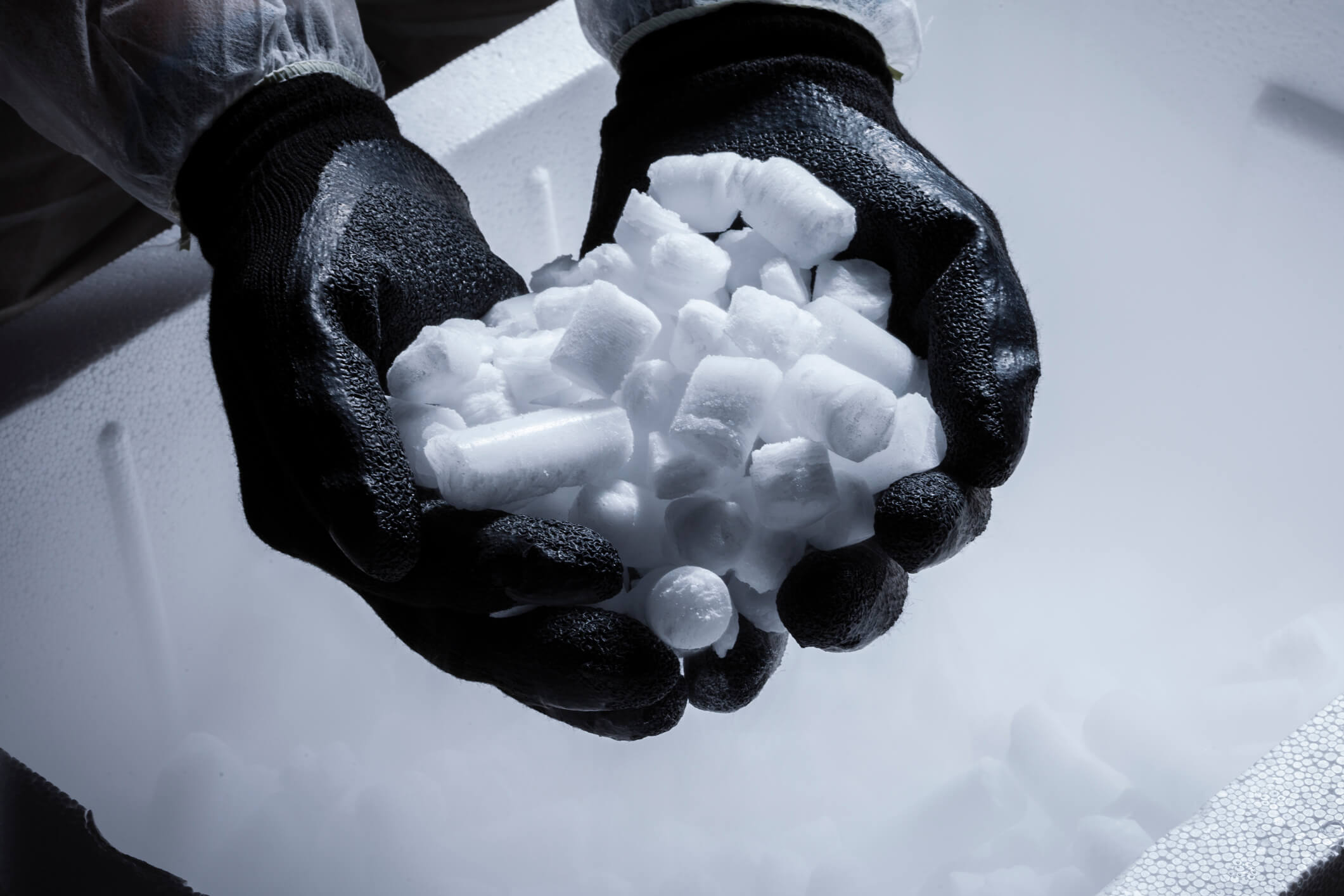
    Dry ice is not regular ice. It is frozen carbon dioxide (CO₂) with a surface temperature of approximately -109°F (-78°C). Direct contact can cause severe cold burns. Understanding proper dry ice handling and disposal helps protect your family, pets, and property while ensuring a safe unpacking experience.

    What Is Dry Ice and Why Is It Used in Frozen Feeder Shipping?

    Unlike regular ice, dry ice does not melt into water. Instead, it changes directly from a solid into carbon dioxide gas through a process called sublimation.

    Dry ice is commonly used in frozen feeders shipping because it:

    • Maintains frozen temperatures for extended periods
    • Protects frozen rodents and poultry feeders during transit
    • Helps preserve product quality in warm weather
    • Provides reliable cold-chain shipping protection

    This makes dry ice an ideal solution for shipping frozen feeder products across long distances.

    How to Open a Dry Ice Shipment Safely?

    When your shipment arrives, unpack it in a well-ventilated area.

    Safe Unpacking Tips

    • Open shipping boxes outdoors or in a ventilated room
    • Avoid placing your face directly inside the package
    • Keep children and pets away during unpacking
    • Wear insulated gloves when handling dry ice
    • Use tongs or protective materials if dry ice needs to be moved

    As dry ice evaporates, carbon dioxide gas is released. Remember, if large quantities of carbon dioxide gas accumulate in small, enclosed spaces, oxygen levels can decrease, creating a potential suffocation hazard. So, proper ventilation helps prevent unnecessary exposure.

    Never Touch Dry Ice With Bare Hands

    Dry ice is cold enough to cause frostbite-like injuries within seconds. When handling dry ice:

    • Wear insulated gloves
    • Use protective cloth, towels, or other materials
    • Handle with tongs when possible
    • Avoid prolonged contact with exposed skin

    Even momentary contact may result in painful cold burns.

    Keep Dry Ice Away From Children

    Children are often attracted to the fog effect produced by dry ice. However, it should always be treated as a hazardous material and should never be handled by children.

    Important Safety Reminder:

    • Never allow children to play with dry ice
    • Do not leave dry ice unattended
    • Store the remaining dry ice out of reach
    • Supervise unpacking at all times

    Dry ice is not a toy and should always be handled by adults using proper safety precautions.

    Avoid Dry Ice Experiments and Dangerous Uses

    Many online videos show dry ice experiments. While some demonstrations may appear harmless, misuse of dry ice can create dangerous situations.

    Never

    • Place dry ice into sealed containers
    • Put dry ice inside bottles, coolers, jars, or tightly closed containers
    • Create pressure-producing devices or homemade explosive devices
    • Place dry ice into enclosed spaces with limited ventilation
    • Handle dry ice without proper protection

    As dry ice converts into gas, pressure increases rapidly inside sealed containers, causing violent ruptures or explosions.

    How to Dispose of Dry Ice Safely?

    The safest method to dispose of dry ice is to allow it to evaporate naturally.

    To safely dispose of dry ice:

    • Place the remaining dry ice in a well-ventilated location
    • Leave it in an open container or an insulated shipping box with the lid open
    • Keep it away from children, pets, and heavily trafficked areas
    • Allow it to disappear naturally over time

    Never Dispose of Dry Ice By:

    • Throwing it into the sink
    • Flushing it down toilets
    • Using garbage disposals
    • Sealing it in trash cans
    • Storing it in airtight containers

    Common Dry Ice Safety Mistakes

    Many dry ice injuries occur because of simple handling errors. Avoid these common mistakes:

    • Touching dry ice with bare hands
    • Leaving dry ice in enclosed rooms
    • Allowing children to handle dry ice
    • Storing dry ice in airtight containers
    • Attempting DIY dry ice experiments
    • Disposing of dry ice improperly

    Following basic safety practices greatly reduces risk.

    Dry Ice Safety Checklist

    Before handling dry ice, remember:

    • Open shipments in a ventilated area
    • Wear gloves or use tongs
    • Keep children and pets away
    • Never seal dry ice in containers
    • Allow dry ice to evaporate naturally
    • Dispose of dry ice only in well-ventilated locations

    Protect Yourself and Others

    Dry ice plays an important role in protecting frozen feeder shipments during transit, but it should always be handled with care. By following proper unpacking, handling, and disposal procedures, you can safely receive your shipment, prevent injuries, and ensure any remaining dry ice is disposed of responsibly.

    A few simple precautions help make frozen feeder deliveries safe, convenient, and worry-free from arrival to disposal.

  • Frozen Day-Old Chicks and Quail:Commitment to Health, Safety, and Quality

    Frozen Day-Old Chicks and Quail:Commitment to Health, Safety, and Quality

    When purchasing Frozen Day-Old Chicks and Frozen Quail as feeders for reptiles, birds of prey, exotic carnivores, and wildlife, product quality starts long before shipping. The health of the feeder animals you purchase directly impacts the health of the animals in your care.

    At The Big Cheese Rodent Factory, we are committed to offering premium frozen day old chicks and quail sourced from suppliers that maintain rigorous standards for flock health, disease prevention, biosecurity, and animal management. Our goal is to provide dependable frozen feeders that meet the expectations of reptile keepers, breeders, zoos, wildlife rehabilitation facilities, and other animal professionals.

    Sourced from NPIP-Compliant Poultry Producers

    Our Frozen Day-Old Chicks and Frozen Quail are sourced from producers that participate in the National Poultry Improvement Plan (NPIP).

    Established by the United States Department of Agriculture (USDA), the NPIP is a voluntary program that helps poultry producers maintain healthy flocks through:

    • Regular monitoring
    • Testing programs
    • Biosecurity practices
    • Disease prevention protocols
    • Ongoing flock health management

    Participation in the NPIP demonstrates a commitment to maintaining flock health and following recognized industry standards designed to reduce the risk of poultry diseases. These standards help ensure that the birds entering the food chain and feeder animal market originate from well-managed operations focused on animal health and welfare.

    Strong Biosecurity Practices

    Participation in NPIP demonstrates a commitment to recognized industry standards designed to reduce the risk of poultry diseases and promote responsible flock management.

    These standards help ensure that birds entering both the food chain and feeder animal market originate from operations focused on animal health and welfare.

    Why NPIP Participation Matters?

    Healthy feeder animals begin with healthy poultry flocks.

    NPIP-compliant producers participate in programs intended to monitor flock conditions and maintain management practices that support long-term poultry health. These efforts help reduce disease risks while promoting responsible production standards throughout the industry.

    For reptile keepers and facilities purchasing feeders for reptiles, sourcing from reputable suppliers provides additional confidence in the products being offered.

    Strong Biosecurity Practices to Protect Flock Health

    Biosecurity is one of the most important tools used to protect poultry populations from disease exposure. NPIP-compliant producers follow procedures designed to limit exposure to potential disease sources and maintain healthy flock conditions.

    These practices may include:

    • Controlled facility access
    • Visitor restrictions
    • Sanitation procedures
    • Health monitoring programs
    • Ongoing flock management
    • Disease prevention protocols

    By working with suppliers that prioritize biosecurity, we help ensure that our Frozen Day-Old Chicks and Frozen Quail originate from responsibly managed poultry operations.

    Understanding Avian Influenza Monitoring

    • Poultry producers
    • Veterinarians
    • State agriculture departments
    • Federal regulatory agencies

    The suppliers we work with participate in programs that monitor flock health and follow established procedures designed to identify and address potential disease concerns.

    These monitoring efforts, combined with strong biosecurity measures and regulatory oversight, help reduce the risk of diseased birds entering the marketplace.

    Quality from Farm to Freezer

    Quality is about more than sourcing alone. After sourcing, our Frozen Day-Old Chicks and Frozen Quail are carefully handled and rapidly frozen to help preserve freshness and nutritional value.

    Proper processing and freezing procedures help:

    • Maintain product integrity
    • Preserve nutritional quality
    • Support long-term freezer storage
    • Deliver consistent feeder quality

    Rapid freezing is an important step in producing premium frozen feeders for reptiles, birds of prey, and carnivorous animals.

    Professionally Packed and Delivered Frozen

    Maintaining product quality during transit is equally important. Every shipment is professionally packed and delivered frozen to help preserve product integrity from our facility to your door.

    Properly insulated packaging and frozen shipping methods help ensure that feeder animals arrive in the condition customers expect.

    Trusted by Reptile Keepers, Raptors, Zoos, and Wildlife Facilities

    Our Frozen Day-Old Chicks and Frozen Quail are commonly used to feed:

    • Snakes
    • Birds of prey
    • Monitor lizards
    • Exotic carnivores
    • Zoo animals
    • Wildlife rehabilitation patients

    These feeder animals provide an important whole-prey option for species that naturally consume avian prey in the wild.

    Confidence You Can Trust

    Whether you’re feeding reptiles, raptors, carnivorous mammals, zoo animals, or wildlife patients, you can purchase with confidence knowing that quality remains a priority at every stage.

    From sourcing through NPIP-compliant producers to strong biosecurity practices, careful processing, rapid freezing, and professional frozen shipping, every step is designed to provide safe, high-quality feeder animals.

    At The Big Cheese Rodent Factory, we remain committed to offering premium Frozen Day-Old Chicks and Frozen Quail that meet the high standards expected by reptile keepers, breeders, wildlife professionals, and institutions across the country.

  • Why Vacuum-Sealed Frozen Feeder Mice and Rats Are Better Than Ziplock Packaging

    Why Vacuum-Sealed Frozen Feeder Mice and Rats Are Better Than Ziplock Packaging

    When shopping for frozen feeder mice or rats, most reptile owners focus strictly on price or feeder size. However, one of the most critical differentiators between suppliers is something many people completely overlook: the packaging.

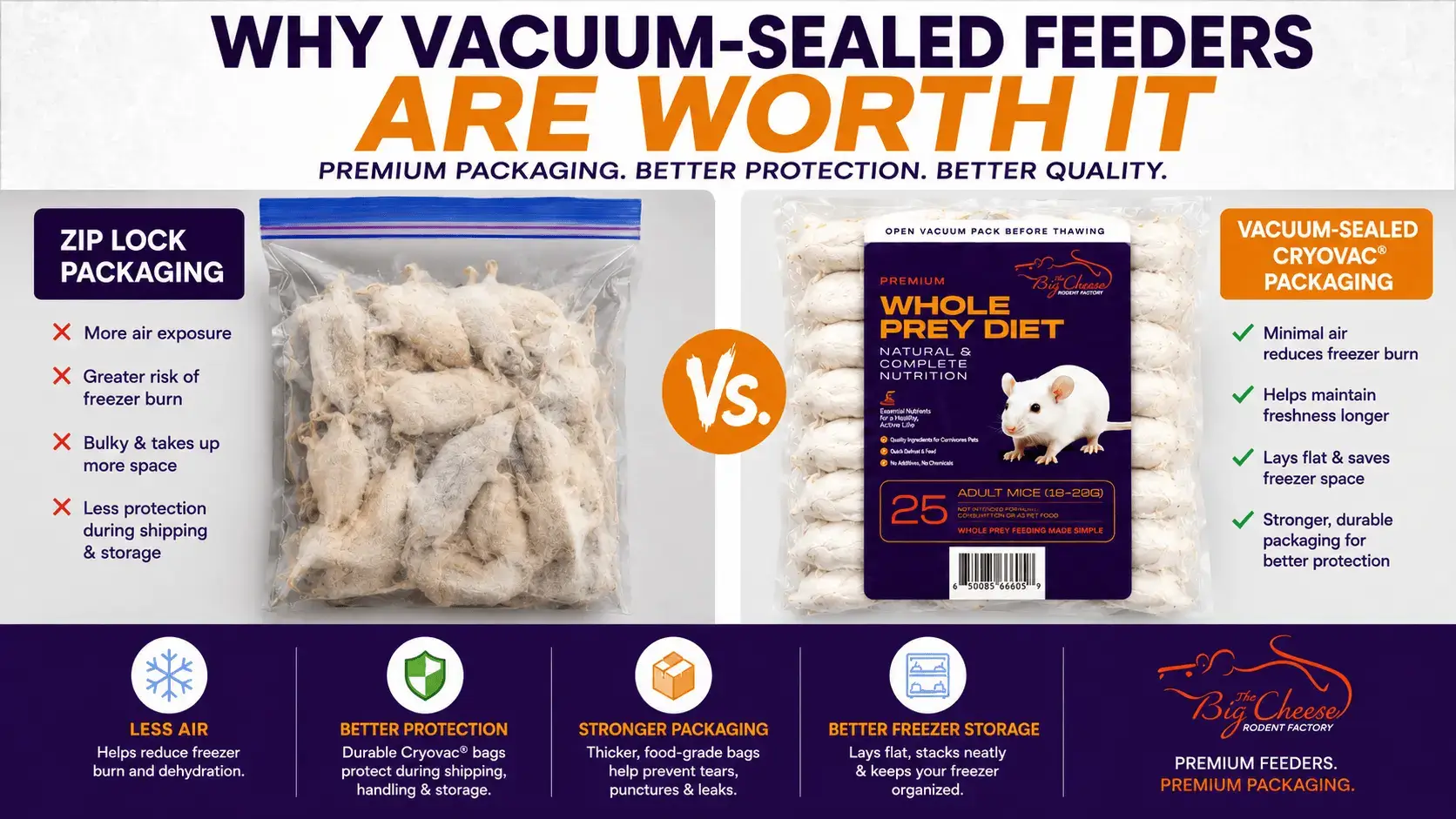
    At The Big Cheese Rodent Factory, every frozen mouse and rat we ship is packaged in premium, food-grade Cryovac® vacuum-sealed bags rather than inexpensive ziplock bags. While vacuum-sealed packaging costs significantly more to produce, we firmly believe it delivers a superior product and a vastly better experience for our customers.

    What Is Vacuum-Sealed Packaging?

    Vacuum sealing removes virtually all air from the package before it is permanently heat-sealed. Our food-grade Cryovac bags are engineered specifically for preserving frozen food products and are widely trusted across the commercial food industry for their exceptional strength, durability, and protective qualities.

    Unlike a standard ziplock bag, there is no reusable opening that can allow air to seep in and out of the package.

    6 Essential Benefits of Vacuum-Sealed Feeder Packaging

    1. Better Protection Against Freezer Burn

    One of the greatest enemies of any frozen food product is exposure to air. When air comes into contact with the surface of frozen items, moisture slowly evaporates, resulting in freezer burn over time. While freezer burn generally does not render feeder animals unsafe, it heavily degrades their appearance and overall product quality.

    Because vacuum sealing removes air from around each feeder, it minimizes freezer burn and perfectly preserves the product during frozen storage.

    2. Maximum Freshness During Long-Term Storage

    Many reptile owners prefer to buy several months’ worth of feeders at a single time to stock up. Vacuum-sealed packaging safeguards your investment while it sits in your freezer by limiting air exposure and reducing dehydration. This ensures the premium quality of your frozen feeders is maintained until the exact moment you are ready to use them.

    3. Stronger, More Durable Packaging

    Food-grade Cryovac bags are considerably thicker and more rugged than typical ziplock bags. This heavy-duty construction provides crucial added protection during:

    • Shipping
    • Handling
    • Freezer storage
    • Moving products in and out of your freezer

    This durable build also drastically reduces the risk of accidental punctures, tears, or ripped packaging.

    4. Better Organization and Space Efficiency in Your Freezer

    Vacuum-sealed bags stay completely flat and stack neatly. Instead of dealing with bulky, loose bags filled with trapped air, vacuum-sealed packages minimize physical clutter, take up far less freezer space, and are much easier to organize. Customers who purchase multiple feeder sizes especially appreciate this cleaner, highly efficient storage solution

    5. Protects Product Quality

    Removing excess air from around each package creates a much more stable, controlled frozen environment for the feeders during storage. This extra layer of environmental protection is precisely why top-tier commercial food producers rely on vacuum sealing for their frozen products.

    6. A Cleaner, More Hygienic Packaging

    Because these bags are permanently heat-sealed, they remain securely locked down until you choose to open them. This results in clean, professional packaging that is pleasant to handle, easy to store, and entirely mess-free.

    Why Don’t All Frozen Feeder Companies Vacuum Seal?

    The simple answer comes down to cost.

    Premium, food-grade Cryovac bags are substantially more expensive than standard ziplock bags. Furthermore, the vacuum-sealing process requires specialized commercial machinery and additional labor during packaging. Using ziplock bags is undeniably faster and cheaper, which is why many frozen feeder suppliers continue to cut corners with them.

    At The Big Cheese Rodent Factory, we intentionally choose premium packaging because we believe the added protection, product integrity, and professional presentation are entirely worth it.

    The Big Cheese Difference

    When you order frozen feeder mice or rats from The Big Cheese Rodent Factory, you receive feeders packaged with the exact same attention to detail that commercial food processors use for high-end frozen goods.

    Our premium vacuum-sealed packaging delivers:

    • Premium, food-grade Cryovac bags
    • Minimal air inside every single package
    • A drastically reduced risk of freezer burn
    • Superior long-term frozen storage
    • Durable, puncture-resistant packaging for shipping and handling
    • Space-saving, flat-stacking packages
    • An ultra-professional presentation
    • Effortless freezer organization

    A Small Detail That Creates a Major Impact

    Packaging may not be the very first thing on your mind when buying frozen feeder rodents, but it plays an indispensable role in protecting product quality during storage. While vacuum-sealed Cryovac bags cost considerably more than standard ziplock bags, we know they provide a cleaner, better-protected product from the day it leaves our facility until feeding day arrives.

    It is just one more reason why reptile owners, professional breeders, zoos, wildlife rehabilitators, and exotic animal professionals have trusted The Big Cheese Rodent Factory for premium frozen feeder animals for more than 25 years.

  • Frozen Feeder Irradiation: An Extra Step Toward Safer Whole Prey

    Frozen Feeder Irradiation: An Extra Step Toward Safer Whole Prey

    Providing safe, nutritious whole prey is one of the most critical responsibilities of reptile keepers, raptor owners, zoos, and wildlife professionals alike. At The Big Cheese Rodent Factory, we are dedicated to producing premium frozen feeders using proven methods that ensure the highest standards of quality and biological safety.

    To uphold this standard, select products in our lineup undergo irradiation. Food irradiation is a well-established, highly reliable technology with a long history of safe use. It effectively reduces naturally occurring bacteria and viruses while fully preserving the essential nutritional value that carnivorous animals depend on to thrive.

    What Is Food Irradiation?

    Food irradiation is a controlled sterilization process that uses precise amounts of radiant energy to reduce harmful microorganisms naturally present in animal tissues. This technology has been used safely for decades on foods intended for human consumption and has undergone exhaustive scientific evaluation globally.

    Unlike a standard ziplock bag, there is no reusable opening that can allow air to seep in and out of the package.

    1. Better Protection Against Freezer Burn

    One of the greatest enemies of any frozen food product is exposure to air. When air comes into contact with the surface of frozen items, moisture slowly evaporates, resulting in freezer burn over time. While freezer burn generally does not render feeder animals unsafe, it heavily degrades their appearance and overall product quality.

    Common Misconception: Irradiation does not make food radioactive.

    Instead, it serves as a clean, non-thermal safety measure, much like pasteurization is universally used to improve the safety of milk. Because irradiation is a purely physical process, absolutely no chemicals, gases, or synthetic preservatives are ever added to the prey items.

    Why Do We Irradiate Frozen Feeders?

    Like all raw animal products, frozen feeder mice, rats, chicks, quail, and rabbits naturally carry baseline bacteria and microorganisms. While strict hygienic handling and flash-freezing are foundational, irradiation provides an indispensable extra layer of biosecurity by significantly neutralizing dangerous pathogens.

    The irradiation process is highly effective at reducing resilient bacteria, including:

    • Salmonella
    • E. coli
    • Listeria

    Furthermore, extensive scientific studies demonstrate that irradiation significantly reduces the viability of specific viral threats, including avian influenza viruses. By targeting these naturally occurring microorganisms, the process gives reptile owners and zoological professionals true peace of mind.

    Does the Process Impact Nutritional Value?

    One of the most frequent questions we receive is whether the process alters the dietary integrity of whole prey.

    The short answer is “NO”, at least not in any meaningful way.

    Decades of peer-reviewed research confirm that core proteins, essential fats, amino acids, and macronutrients remain completely intact after undergoing irradiation. Any negligible nutrient losses are entirely comparable to the minor variations that occur during standard freezing or conventional cooking.

    Likewise, the process does not alter the natural appearance, physical texture, or palatability of the frozen whole prey, ensuring seamless feeding acceptance.

    A Proven Track Record of Safety

    Food irradiation stands as one of the most thoroughly vetted and heavily researched food safety technologies available today. Backed by decades of real-world application, its safety profile is ironclad.

    Major global health authorities and U.S. federal regulatory agencies officially recognize food irradiation as a safe, highly effective methodology for eliminating foodborne pathogens, including:

    • U.S. Food and Drug Administration (FDA)
    • U.S. Department of Agriculture (USDA)
    • Centers for Disease Control and Prevention (CDC)
    • World Health Organization (WHO)

    These leading organizations have meticulously reviewed decades of empirical scientific evidence, validating irradiation as a primary defense against dangerous pathogens in animal and human food supply chains.

    Benefits of Choosing Irradiated Frozen Feeders

    • Enhanced Biological Safety: Greatly reduces pathogens naturally present in raw animal tissues, establishing a superior standard of health protection for your animals.
    • Preserved Nutritional Quality: Whole prey retains 100% of the vital proteins, fats, and micronutrients required for a balanced, species-appropriate diet.
    • Zero Chemical Residues: Because it is a physical, non-chemical treatment, it leaves behind no synthetic additives, toxins, or chemical preservatives.
    • Maintains Raw Integrity: Properly irradiated products look, feel, and smell exactly like non-irradiated prey, avoiding any issues with picky eaters.
    • Globally Endorsed Security: Supported by the world’s leading public health authorities and backed by over decades of safe operational history.

    The Big Cheese Rodent Factory’s Commitment to Safety

    For more than 25 years, The Big Cheese Rodent Factory has been a trusted leader in producing premium frozen feeders for dedicated caretakers across the United States. As part of our evolving commitment to quality assurance, we choose to irradiate select products to deliver a decisive safeguard against naturally occurring pathogens.

    When combined with our strict sanitation standards, rapid flash-freezing, and specialized cold-chain packaging, irradiation allows us to deliver some of the safest, cleanest frozen feeder products available on the market today.

    Whether you are feeding companion snakes, exotic lizards, magnificent birds of prey, or other specialized carnivorous species, you can feed with absolute confidence. Every single product we ship is supported by decades of industry expertise, rigorous quality control, and an unwavering commitment to animal health.

    Food irradiation is a gold-standard technology with an impeccable safety record. Supported by the FDA, USDA, CDC, and WHO, it provides the ultimate safety net, reducing dangerous bacteria and viruses while securing the total nutritional integrity your animals deserve.

    At The Big Cheese Rodent Factory, providing premium feeders means continuously embracing proven, science-backed technologies that benefit both our clients and the animals they love.