SAVE BIG! FREE SHIPPING ON ALL ORDERS OVER $129! Visit Store

Category: Uncategorized

  • Ball Python Quick Feeding Chart by Weight: Choose the Right Big Cheese Feeders for Reptiles (By Grams)

    Ball Python Quick Feeding Chart by Weight: Choose the Right Big Cheese Feeders for Reptiles (By Grams)

    Use this Ball Python quick feeding chart to select the correct size frozen rats, frozen mice, and other feeder rodents based on your snake’s weight. This guide includes feeding frequency, target prey weight, and recommended feeder sizes, including frozen jumbo mice, medium rats, and colossal rat options for growing and adult ball pythons.

    Why Choose the Proper Feeder Size for Ball Pythons?

    Ball pythons grow healthy when prey size matches their body weight and body width. Feeding prey that is too small may lead to poor growth and nutritional inconsistency, while oversized prey can increase the risk of stress, regurgitation, or feeding refusal.

    A common reptile feeding guideline is:

    • Feed based on weight + schedule (by weight class).
    • Choose a prey item that totals ~10% of your ball python’s body weight (and no more than ~1.5× the snake’s width).
    • Adjust feeding schedules as the snake matures.

    Using appropriately sized Frozen Rats and Frozen Mice supports healthy muscle development, smoother sheds, and better feeding response over time.

    Shop feeders: Frozen Rats | Frozen Mice

    Step 1: Find your feeding interval (Ball Python)

    In a  weight-based schedule:

    Ball Python chart (weight → target grams → Big Cheese feeder options)

    Ball Python Weight ClassRecommended ScheduleTarget Prey (≈10%)Best Big Cheese Options (by weight)
    Up to ~60g (hatchlings)~5 days~4–6gFuzzy Mice (4–6g) 
    60–100g7 days~6–10gFuzzy Mice (4–6g) or Hopper Mice (7–12g) 
    100–200g7 days~10–20gHopper Mice (7–12g) or Small Adult Mice (13–17g) 
    200–350g7–10 days~20–35gAdult Mice (18–29g) or Jumbo Mice (30–39g) 
    350–500g10–14 days~35–50gJumbo Mice (30–39g) or Colossal Mice (40–90g) 
    500–700g14–21 days~50–70gWeaned Rats (30–45g) (small end) or Small Rats (46–84g) 
    700–1000g14–21 days~70–100gSmall Rats (46–84g) or Medium Rats (85–149g) (small end)
    1000–1500g14–21 days~100–150gMedium Rats (85–149g) 
    1500g+28–56 days150g+Large Rats (150–279g) (common)

    Maintaining a consistent feeding interval with quality Feeder Rodents helps regulate digestion and feeding behavior.

    Step 2: Use ~10% of snake weight to pick feeder grams 

    To determine the ideal feeder size:

    Target prey weight (grams) ≈ Ball python weight × 0.10

    For example:

    • A 300g ball python should eat prey around 30g
    • A 1000g adult ball python typically needs prey around 100g

    Once you determine the target prey weight, choose Big Cheese feeder rodents whose listed gram range matches your target.

    Ball Python feeding chart (weight → target grams → Big Cheese feeder options)

    Use this quick-reference Ball Python chart to select the best frozen rats, frozen mice, or other appropriately sized feeder rodents for your snake. 

    Pinky 3–9g, Fuzzy 10–18g, Pup 19–29g, Weaned 30–45g, Small 46–84g, Medium 85–149g, Large 150–279g, Jumbo 280–399g, Colossal 500–900g (some 900g+).

    Optional: add variety (ball python friendly)

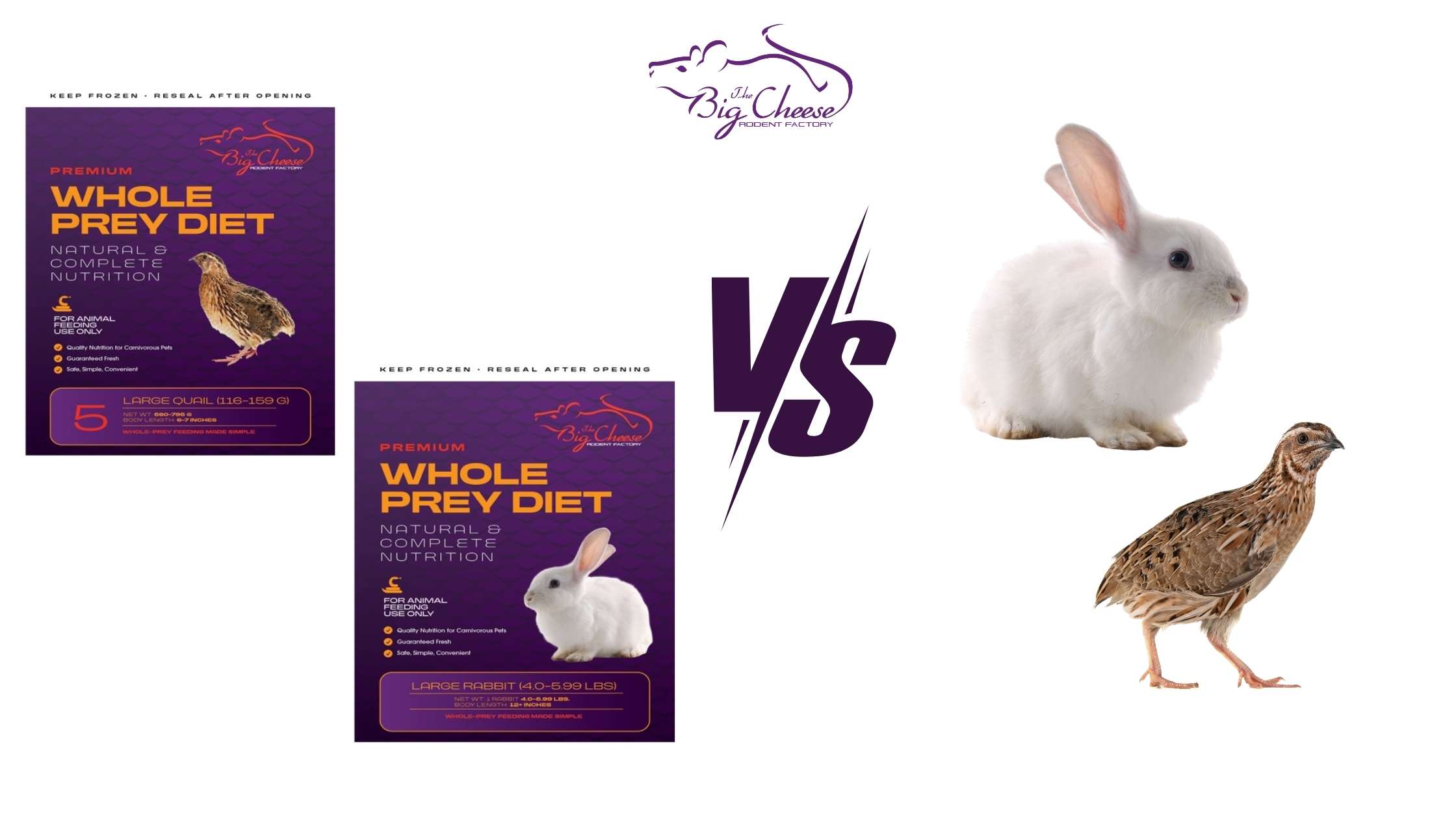
    You can add quail and chicks as variety prey options (along with rodents).
    If you want to offer variety: Day-Old Chicks | Quail
  • Corn Snake Quick Feeding Chart by Weight: Choose the Right Big Cheese Frozen Feeder Mice Size

    Corn Snake Quick Feeding Chart by Weight: Choose the Right Big Cheese Frozen Feeder Mice Size

    Feed your corn snake the correct prey size with this quick corn snake feeding chart by weight. If you are looking to buy frozen feeder mice for growing snakes, such as hopper mice, frozen jumbo mice, or small pinky mice for sale, this guide helps match feeder size to your corn snake’s body weight for healthy feeding and digestion.

    This corn snake feeder guide includes recommended prey gram ranges, feeding intervals, and Big Cheese feeder sizing for hatchlings, juveniles, and adult corn snakes. From Small Pinky Mice to colossal mice, use this chart to select the ideal frozen prey size by grams.

    Use ~10% of your corn snake’s body weight per feeding, and keep prey ≤ 1.5× the snake’s width.

    Corn Snake WeightTarget Prey (≈10%)Big Cheese Feeder Size (by grams)
    10–20g1–2gSmall Pinky Mice (1.0–1.99g) 
    20–40g2–4gLarge Pinky Mice (2.0–3.9g) 
    40–70g4–7gFuzzy Mice (4.0–6.0g) 
    70–120g7–12gHopper Mice (7.0–12.0g) 
    120–170g12–17gSmall Adult Mice (13–17g) 
    170–290g17–29gAdult Mice (18–29g) 
    290–390g29–39gJumbo Mice (30–39g) 
    390g+40g+Colossal Mice (40–90g) 

    Feeding interval:

    • Hatchlings: every 7–10 days
    • Juveniles: every 7–14 days
    • Adults: every 14–21 days

    Hopper Mice and Jumbo Mice for Growing Corn Snakes

    As juvenile corn snakes increase in size, many transition to Hopper Mice for appropriately sized meals during active growth stages.

    Larger adult corn snakes may eventually require Frozen Jumbo Mice or colossal mice, depending on body weight and feeding schedule.

    If your snake falls between prey sizes:

    • Choose the slightly smaller feeder
    • Monitor digestion and body condition
    • Increase feeder size gradually over time

    This method often helps reduce feeding refusals and stress during prey transitions.

  • Feeding Challenges in Captive Reptiles: What Every Owner Should Know

    Feeding Challenges in Captive Reptiles: What Every Owner Should Know

    Feeding captive reptiles isn’t always as simple as offering food and watching it disappear. Snakes, lizards, and other reptiles can refuse meals, skip feedings, or react negatively to prey that isn’t properly sized or prepared. Understanding why these issues happen—and how to fix them—can prevent stress, illness, and long-term feeding problems.

    If you rely on frozen mice, rats, chicks, quail, or rabbits to feed your animals, the information below will help you improve feeding success while keeping your animals safe.

    1. Why Won’t My Snake Eat Frozen Mice?

    A snake refusing frozen-thawed prey is one of the most common concerns among reptile keepers. In most cases, the issue isn’t the prey—it’s how it’s prepared or presented.

    Common reasons include:

    • Incorrect temperature – Frozen prey must be fully thawed and warmed to body temperature. Cold prey is often ignored.
    • Reduced scent – Improper storage or excessive rinsing can remove scent cues snakes rely on.
    • Environmental stress – New enclosures, excessive handling, or noise can suppress feeding responses.
    • Transition from live prey – Snakes previously fed live mice may need time to adjust.

     Tip: Many keepers see better results when using properly vacuum-sealed, high-quality frozen mice rather than bargain feeders that lose scent and texture during storage.

    2. What to Do If My Reptile Refuses Food

    When a reptile refuses food, don’t panic—and don’t force it. Feeding refusal is usually a sign of a husbandry issue rather than illness.

    Steps to take:

    • Verify enclosure temperatures and humidity
    • Reduce handling for several days before feeding
    • Offer prey during the animal’s natural feeding time (often evenings)
    • Double-check prey size
    • Avoid repeated feeding attempts within short time frames

    Using consistent, clean, frozen feeders helps eliminate variables that can trigger refusal. Live prey introduces stress, risk of injury, and unpredictability—factors that often worsen feeding problems.

    3. Is It Normal for a Snake to Skip Meals?

    Yes—skipping meals is completely normal, especially for snakes.

    Snakes may stop eating due to:

    • Seasonal changes
    • Shedding cycles
    • Breeding behavior
    • Minor environmental stress

    Healthy adult snakes can go weeks—or longer—without food as long as their body condition remains stable. Offering appropriately sized frozen prey on a consistent schedule is the safest way to resume feeding once the animal is ready.

    Reminder: Overfeeding after a fast can be just as harmful as underfeeding.

    • Snake Feeding Schedules by Species
    • Bulk Frozen Rodents for Reptile Owners

    4. Can Feeding the Wrong Size Prey Harm My Animal?

    Yes. Feeding prey that is too large or too small can cause serious health issues.

    Potential problems include:

    • Regurgitation
    • Digestive stress or impaction
    • Poor nutrition
    • Increased feeding anxiety

    A general guideline is that prey should be no wider than the widest part of your reptile’s body. One major advantage of frozen feeders is the ability to select exact prey sizes, from pinky mice to jumbo rats.

    This precision helps prevent feeding injuries and improves digestion.

    5. How to Reduce Feeding Stress in Captive Reptiles

    Stress is one of the leading causes of feeding problems in captive reptiles.

    Ways to reduce feeding stress:

    • Feed in a quiet, low-traffic area
    • Use feeding tongs instead of hands
    • Avoid enclosure changes near feeding days
    • Limit handling before and after meals
    • Use clean, humanely euthanized frozen prey

    Frozen mice, rats, chicks, quail, and rabbits eliminate the risk of bites and scratches from live prey—making feeding calmer and safer for both the reptile and the owner.

    • Why Frozen Feeders Are Safer Than Live Feeding
    • Frozen Chicks, Quail, and Rabbits for Large Reptiles

    Final Thoughts

    Feeding challenges are a normal part of reptile ownership, but most issues are easily resolved with proper preparation and consistency. High-quality frozen feeders provide a safe, humane, and reliable feeding solution when used correctly.

    By selecting the right prey size, maintaining proper enclosure conditions, and using frozen feeders instead of live prey, you can dramatically improve feeding success and long-term health.

    Explore our full selection of frozen mice, rats, chicks, quail, and rabbits—shipped frozen and handled with care.

    • Shop All Frozen Feeders
    • Bulk Orders for Reptile Owners
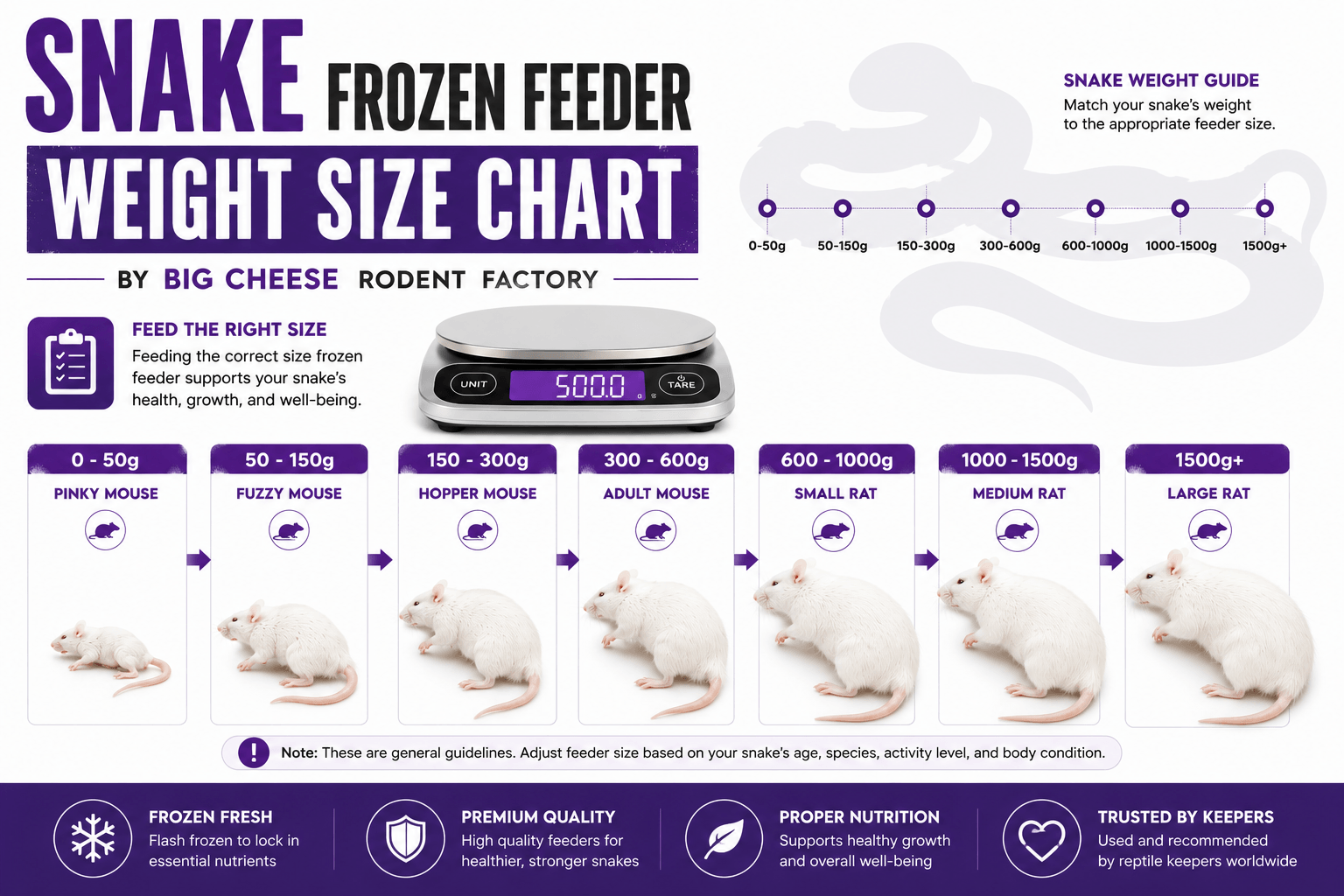
  • Snake Frozen Feeder Weight Size Chart by  by Big Cheese Rodent Factory

    Snake Frozen Feeder Weight Size Chart by  by Big Cheese Rodent Factory

    Choose the right Frozen Feeders for your snake using this quick weight-based feeding chart. This quick snake feeder size chart helps reptile owners select properly sized feeder mice and frozen rats help support healthy digestion, growth, and consistent feeding for hatchlings, juveniles, and adult snakes.

    Use this page when you’re ordering and want a fast, reliable frozen feeders pick.

    How to use this chart (30 seconds)

    • Weigh your snake in grams (g)
    • Use ~10% of body weight as a simple starting point (juveniles often a bit higher, adults often a bit lower).
    • Pick the feeder whose gram range matches your target.

    Shop by category: Frozen Feeder Mice | Frozen Feeder Rats

    Snake weight → recommended Big Cheese feeder size (by weight)

    Rule of thumb used here: target prey is roughly ~10% of snake weight as a starting point.

    Snake Weight (g)Target Prey (g)Best Big Cheese Options
    25–50g2.5–5gLarge Pinky Mice (2.0–3.9g) or Fuzzy Mice (4.0–6.0g) 
    50–100g5–10gFuzzy Mice (4.0–6.0g) or Hopper Mice (7.0–12.0g) 
    100–170g10–17gHopper Mice (7.0–12.0g) or Small Adult Mice (13–17g) 
    170–290g17–29gAdult Mice (18–29g) 
    290–390g29–39gJumbo Mice (30–39g) 
    390–840g39–84gColossal Mice (40–90g) or Small Rats (46–84g) 
    840–1,490g84–149gMedium Rats (85–149g) 
    1,490–2,790g149–279gLarge Rats (150–279g) 
    2,790–3,990g279–399gJumbo Rats (280–399g) 
    4,000g+400g+Colossal Rats (500–900g) (some can be 900g+)

    Big Cheese feeder weights (quick reference)

    Mice (grams each)

    Many hatchling and juvenile snakes begin with appropriately sized feeder mice before transitioning to larger rodents.

    Mouse SizeWeight Range
    Small Pinky1.0–1.99g
    Large Pinky2.0–3.9g
    Fuzzy4.0–6.0g
    Hopper7.0–12.0g
    Small Adult13–17g
    Adult18–29g
    Jumbo30–39g
    Colossal40–90g

    Smaller species and juvenile snakes commonly feed on fuzzy mice, hopper mice, and adult mice during growth stages.

    Rats (grams each)

    Larger snakes and mature constrictors often transition from mice to Feeder Rats for improved feeding efficiency and larger meal sizing.

    Rat SizeWeight Range
    Pinky3.0–9.0g
    Fuzzy10–18g
    Pup19–29g
    Weaned30–45g
    Small46–84g
    Medium85–149g
    Large150–279g
    Jumbo280–399g
    Colossal500–900g (some 900g+)

    Adult ball pythons, boas, and larger snakes commonly feed on small, medium, or large frozen rats depending on species and body condition.

    When to Transition from Mice to Rats

    Many reptile keepers transition snakes from mice to rats once:

    • Adult mice are no longer sufficient
    • Larger prey is needed for healthy growth
    • Feeding multiple mice becomes inefficient

    Rats provide:

    • Larger prey options
    • Higher caloric density
    • Better long-term feeding efficiency
    • More appropriate sizing for adult constrictors

    However, many smaller colubrids remain on mice throughout adulthood.

    One-Line Safety Note

    If your snake falls between feeder sizes, choose the smaller prey item for the next meal and gradually increase feeder size over time.

  • Frozen Feeder Shipping Explained: How Frozen Mice and Other Feeders Arrive Safely

    Frozen Feeder Shipping Explained: How Frozen Mice and Other Feeders Arrive Safely

    If you’re searching for frozen feeder shipping, frozen mice delivery, or wondering “do frozen feeders arrive thawed?”, you’re not alone. These are some of the most common questions reptile keepers, breeders, and wildlife professionals ask before ordering online.

    At Big Cheese Rodent Factory, frozen feeder animals are shipped using a proven system designed to keep your order frozen, protected, and reliable—year-round.

    How Frozen Feeder Shipping Works

    Frozen feeder animals are shipped using a cold-chain process that maintains frozen temperatures from the moment your order leaves our facility until it reaches your door.

    All orders are packed in heavy-duty insulated boxes and shipped via FedEx Ground, which provides fast, consistent transit across the United States. This allows us to ship:

    Do Frozen Feeders Require Overnight Shipping?

    No—overnight shipping is not required for frozen feeder animals.

    Thanks to our advanced insulation and the reliability of FedEx Ground service, frozen feeders can safely ship over multiple days while remaining frozen. This allows us to:

    • Keep shipping costs reasonable
    • Avoid unnecessary stress on the package
    • Still guarantee frozen delivery

    Most customers are surprised to learn that proper insulation is far more important than overnight speed.

    Do Frozen Feeders Arrive Thawed?

    One of the biggest concerns customers have is:
    “Do frozen feeders arrive thawed?”

    In the vast majority of cases, no. Our packaging system is designed to keep feeders frozen well beyond normal delivery times.

    However, if your frozen feeders ever arrive partially thawed or damaged:

    1: Contact us immediately

    2: Take clear photos of the affected product

    3: Email the photos to us so we can review the issue

    Once confirmed, we will reship the damaged product at no cost.
    We guarantee frozen delivery, plain and simple.

    Why Insulated Packaging Is Critical for Frozen Mice Delivery

    When it comes to frozen mice delivery and other feeders, insulation matters more than shipping speed.

    We use a high-performance encapsulated fiberglass insulated blanket, which is the best insulation system we’ve tested. Compared to standard foam liners, this insulation dramatically slows temperature transfer and protects your feeders from heat exposure.

    In testing, shipments packed with this insulation have remained frozen for up to 13 days, providing an enormous safety buffer during transit.

    This is why our frozen feeder shipping process is dependable even during longer ground deliveries.

    Shipping Frozen Feeders in Summer vs. Winter

    Seasonal weather plays a role in how frozen feeders are packed—but our process adapts automatically.

    Summer Frozen Feeder Shipping

    • Additional dry ice is used
    • Extra precautions are taken for long-distance shipments
    • Packaging is optimized for high ambient temperatures

    Winter Frozen Feeder Shipping

    • Less dry ice is required
    • Insulation still prevents freeze-thaw cycles
    • Feeders stay frozen without excessive temperature swings

    No matter the season, frozen feeder animals are packed specifically for current conditions.

    Order Frozen Feeders With Confidence

    If you’re ordering online and searching for reliable frozen feeder shipping, you can feel confident knowing your order is packed with:

    • Industry-leading insulation
    • Seasonally adjusted dry ice
    • Proven multi-day freeze protection
    • A clear reshipment guarantee if issues occur

     Shop Frozen Mice, Frozen Rats, Frozen day old Chicks, Frozen Quail, and Frozen Rabbits today..

  • Frozen vs. Live Feeders: Which Is Better for Your Reptile?

    Frozen vs. Live Feeders: Which Is Better for Your Reptile?

    Choosing the right feeder prey is one of the most important decisions you’ll make for your reptile, bird of prey, or carnivorous animal. At Big Cheese Rodent Factory, we hear this question every day:

    Should I feed live prey or frozen feeders?

    While both options exist, experienced keepers, breeders, veterinarians, and zoos overwhelmingly prefer frozen feeders for safety, consistency, and animal welfare. Here’s why.

    What Are Live Feeders?

    Live feeders are prey animals—such as mice, rats, chicks, quail, or rabbits—sold alive and fed directly to predator animals.

    Potential Benefits of Live Feeding

    • Can trigger a feeding response in reluctant eaters
    • Mimics natural hunting behavior

    Serious Drawbacks of Live Feeders

    • Risk of injury to your animal
    • Higher chance of disease and parasites
    • Ethical concerns
    • More time, effort, and cost
    • Unpredictable quality and size

    Live feeding should only be used when absolutely necessary and always under close supervision.

    What Are Frozen Feeders?

    Frozen feeders are humanely euthanized prey animals that are rapidly frozen at peak freshness. Once thawed, they provide the same nutrition—without the risks.

    At Big Cheese Rodent Factory, we offer a full range of frozen feeders, including:

    Safety: Why Frozen Feeders Are the Better Choice

    Live Feeders Can Seriously Injure Reptiles

    Live rodents can and do:

    • Bite eyes, tongues, and faces
    • Scratch and claw
    • Cause infections requiring veterinary care
    • Kill stressed or weakened animals

    This is why most keepers feeding frozen mice and frozen rats choose pre-killed prey instead of live animals.

    Frozen feeders eliminate these risks entirely.

    Disease & Parasite Control

    Live prey can introduce:

    Refrigerator thawing is the safest and most reliable method for thawing frozen feeder rodents.

    • External mites
    • Internal parasites
    • Harmful bacteria such as Salmonella

    Frozen feeders—especially those sourced from reputable suppliers like Big Cheese Rodent Factory—help reduce parasite transmission and maintain a cleaner feeding environment.

    Nutrition: Are Frozen Feeders as Healthy as Live?

    Yes—when handled correctly.

    Our frozen feeders are:

    • Properly raised and fed
    • Consistently sized
    • Quickly frozen to lock in nutrients

    Whether you’re feeding frozen rats for adult snakes or frozen chicks for raptors, your animals receive reliable, whole-prey nutrition.

    Convenience & Storage

    1: Ensure prey is fully thawed (no ice crystals inside).

    2: Warm to feeding temp as described.

    3: Use tongs or gloves to offer prey (avoid hand feeding for safety).

    4: Observe the animal eating — if it rejects, do not force. If unused, discard (do not re-refrigerate for later).

    Note: Never leave thawed prey inside the enclosure for extended periods. 

    Storage Rules & Timelines

    Live Feeders

    • Require cages, food, and water
    • Produce odor and noise
    • Can escape or die before feeding
    • Finding a local/reliable source of live feeders is difficult

    Frozen Feeders

    • Store safely in your freezer
    • No daily care required
    • Ideal for bulk buying
    • Are constantly available

    Hygiene & Safe Handling Tips

    • As with any meat product frozen rodents can carry bacteria— always practice safe handling.
    • Wash hands thoroughly with soap and hot water before and after handling prey.
    • Wear disposable gloves if possible.
    • Clean and disinfect any surfaces, bowls, tongs, or containers that contact the prey.

    Many customers stock up on bulk frozen mice and rats to reduce costs and ensure consistent availability.

    Cost: Frozen Feeders Save Money Long-Term

    Frozen feeders are more economical because:

    • You can order in bulk
    • There’s no loss from feeder deaths
    • No maintenance costs

    This is especially important for breeders and facilities purchasing frozen rodents and poultry feeders regularly.

    Ethical & Humane Considerations

    • Humanely euthanized
    • Stress-free for prey animals
    • Considered best practice by professionals

    This is why many zoos and rescues rely on frozen quail, chicks, and rabbits instead of live prey.

    What If My Reptile Won’t Eat Frozen Feeders?

    Most reptiles can be transitioned successfully.

    Helpful tips:

    • Thaw prey completely
    • Warm to body temperature
    • Use feeding tongs for movement

    Start with prey similar in size to what your animal is already eating—such as switching from live mice to frozen mice first.

    Frozen vs. Live Feeders: The Bottom Line

    For most keepers:

    Frozen feeders are safer, cleaner, more humane, and more cost-effective.

    Live feeding should be the exception—not the rule.

    Why Buy Frozen Feeders from Big Cheese Rodent Factory?

    When you order from Big Cheese Rodent Factory, you get:

    • Premium frozen mice, rats, chicks, quail, and rabbits
    • Clear sizing and labeling
    • Reliable frozen shipping
    • A supplier trusted by hobbyists, breeders, and institutions

    You can browse all frozen feeders by Big Cheese Rodent Factory

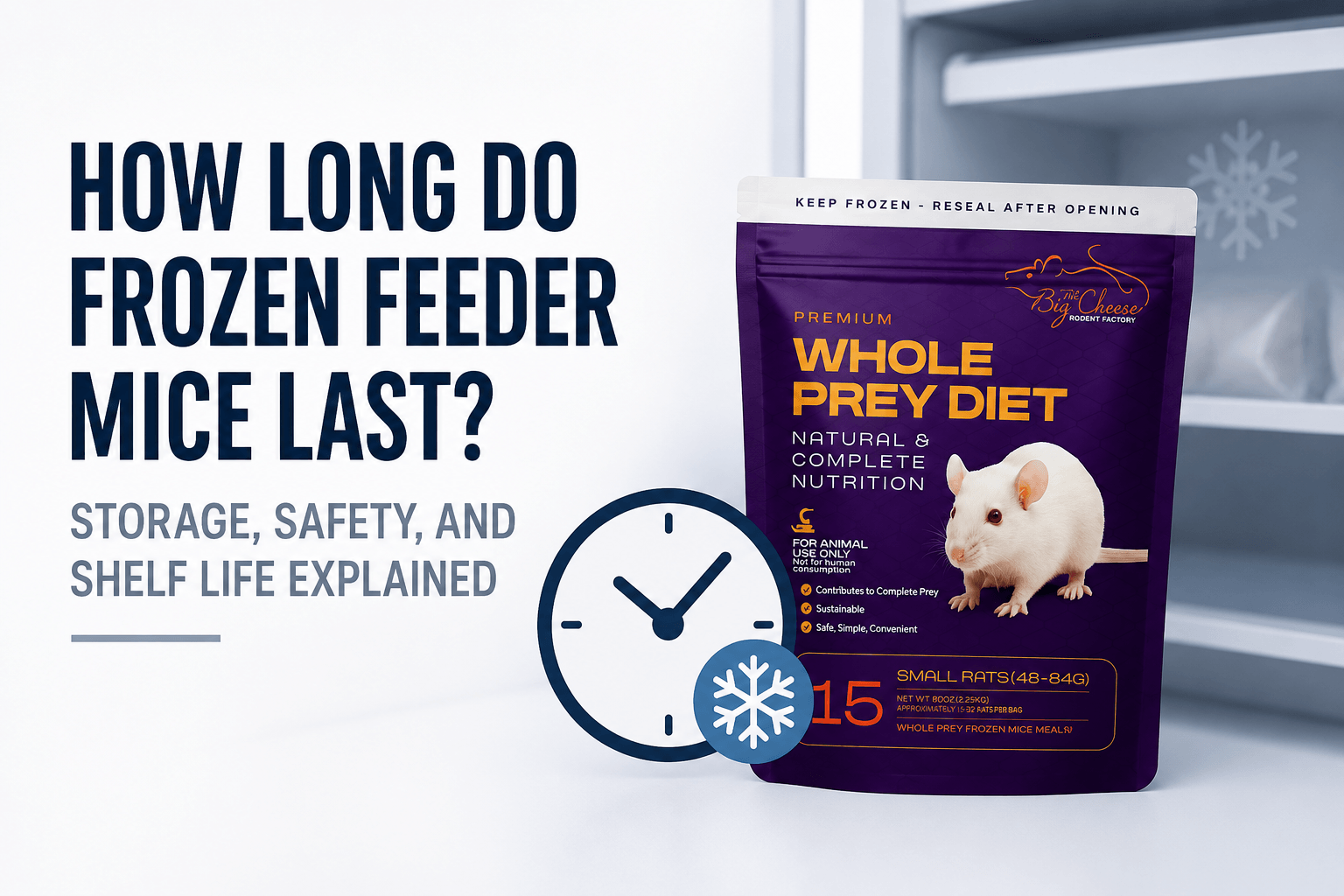
  • How Long Do Frozen Feeder Mice Last? Storage, Safety, and Shelf Life Explained

    How Long Do Frozen Feeder Mice Last? Storage, Safety, and Shelf Life Explained

    How long do frozen feeder mice last?
    This is one of the most common questions reptile owners, breeders, and wildlife caretakers ask—and for good reason. Proper storage directly affects feeder safety, nutritional value, and your animal’s health.

    At our facility, all feeder mice and feeder rats are vacuum sealed before freezing, which significantly extends shelf life and protects against freezer burn. This guide explains exactly how long frozen feeder mice last, how to store them correctly, and how to tell when a feeder should not be used.

    How Long Do Frozen Feeder Mice Last in the Freezer?

    When stored properly at 0°F (-18°C) or colder, vacuum-sealed frozen feeder mice can last 6–12 months in the freezer without meaningful loss of quality.

    Key factors that affect how long frozen feeder mice last:

    • Consistent freezer temperature
    • Vacuum-sealed packaging
    • Limited exposure to air and moisture
    • Avoiding repeated thawing and refreezing

    Vacuum sealing removes oxygen, which slows dehydration and freezer burn—the most common causes of feeder quality loss.

    For best results, deep or chest freezers outperform standard refrigerator freezers due to more stable temperatures.

    How to Properly Store Frozen Feeder Mice and Rats

    Correct storage is essential if you want frozen feeder mice to last as long as possible.

    Our mice and rats arrive vacuum sealed, and should remain sealed until you are ready to use them. Once opened, unused feeders should be stored in airtight freezer bags and used promptly.

    Best storage practices:

    • Store at 0°F (-18°C) or colder
    • Keep feeders flat and sealed
    • Avoid freezer doors
    • Label packages with delivery dates
    • Use a first-in, first-out rotation

    Proper storage ensures frozen feeder mice last closer to the 12-month range rather than the minimum.

    Can You Refreeze Thawed Feeder Mice?

    No—refreezing thawed feeder mice is not recommended.

    Once frozen feeder mice fully thaw, bacteria can begin to grow. Refreezing does not kill bacteria and may create a higher risk of illness for your animal.

    Safe handling tips:

    • Thaw only what you plan to feed
    • Discard unused thawed feeders
    • Never refreeze feeders that reached room temperature

    Even vacuum-sealed feeders should not be refrozen after thawing.

    Preventing Cross-Contamination When Handling Frozen Feeders

    Frozen feeder mice should always be treated as raw animal products.

    To reduce contamination risk:

    • Use dedicated tongs or gloves
    • Wash hands thoroughly after handling
    • Sanitize surfaces and thawing containers
    • Keep feeders away from human food areas

    These steps protect both you and your animals.

    How to Tell If Frozen Feeder Mice Have Gone Bad

    Even when properly frozen, feeder mice should be inspected before use.

    Do not feed frozen feeder mice if you notice:

    • Strong sour or rotten odors after thawing
    • Slimy or sticky texture
    • Unusual discoloration (gray, green, or excessive darkening)
    • Evidence of prior thawing and refreezing

    Properly stored vacuum-sealed feeders should have a neutral smell and normal appearance when thawed.

    Final Answer: How Long Do Frozen Feeder Mice Last?

    Frozen feeder mice last 6–12 months when vacuum sealed and stored at 0°F or colder.
    Poor storage, air exposure, and temperature fluctuations will shorten shelf life. Vacuum sealing dramatically improves longevity, but proper freezer habits still matter.

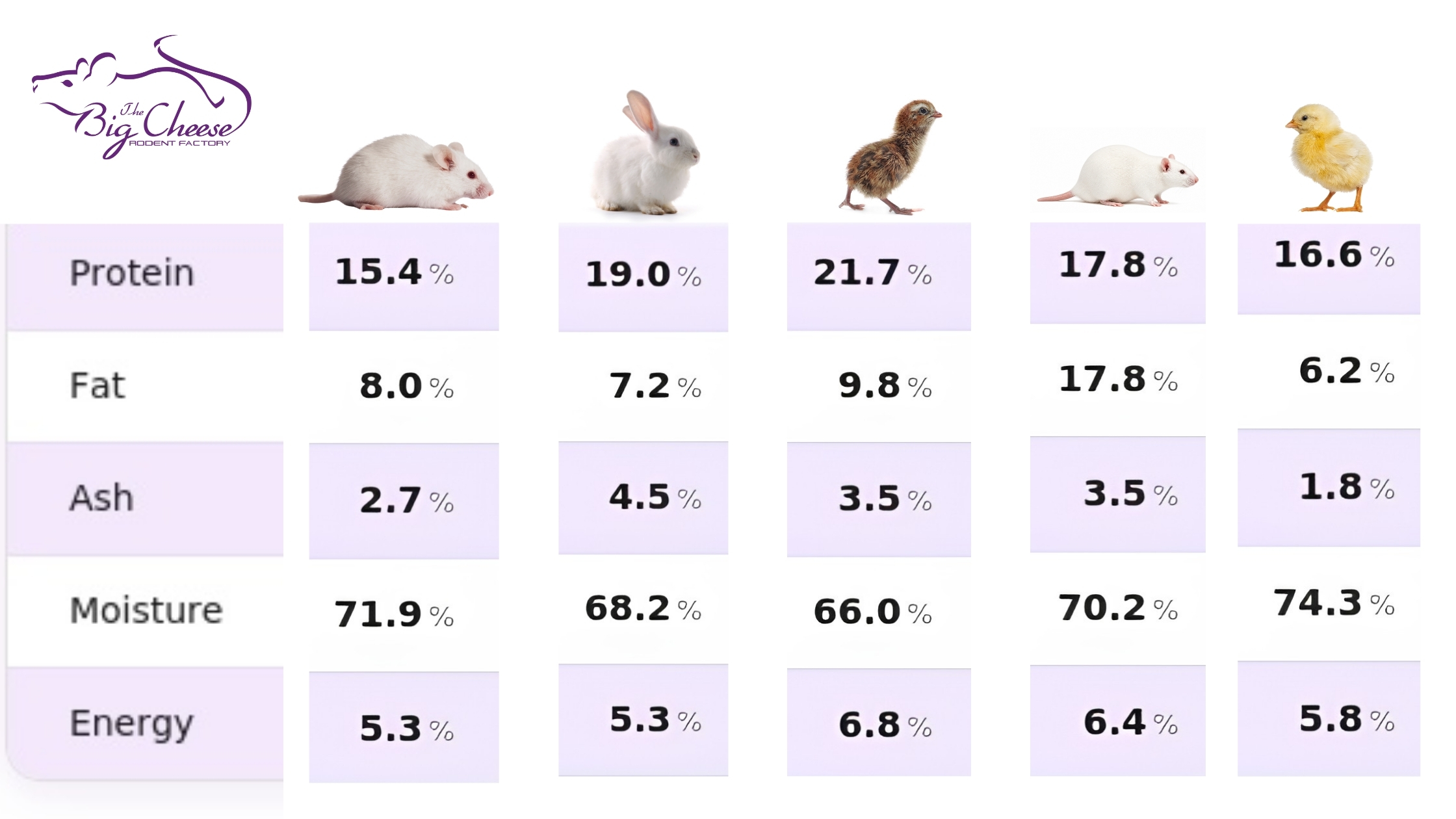
  • Nutritional Analysis of Common Feeder Animals (Whole Prey)

    Nutritional Analysis of Common Feeder Animals (Whole Prey)

    Properly thawing Frozen Mice and Frozen Rats is essential for safe reptile feeding. Incorrect thawing methods can increase bacterial growth, damage prey quality and nutritions, and create unsafe feeding conditions like burned/bloody meals for snakes and other reptiles. It can injure or sicken your animal, too.

    This guide explains how to safely defrost frozen feeder rodents, warm prey correctly, avoid common mistakes, and maintain proper hygiene during feeding. 

    Quick Guide: Safe Frozen Feeders Thawing

    For the safest reptile feeding process: 

    • Plan ahead: move prey from freezer → refrigerator to thaw slowly whenever possible.
    • Never thaw in the vacuum bag without opening first: Thawing while the prey is under a vacuum condition will cause the prey to bleed.
    • Use sealed bags: never expose prey directly to water. Use a zip lock bag if possible.
    • Keep temps safe: thaw in the fridge, then warm in a sealed bag in warm water to (98–100°F) just before feeding.
    • Do not refreeze once thawed, never refreeze
    • Practice hygiene: wash hands, sanitize surfaces, and avoid cross-contamination.

    Using proper thawing techniques helps preserve nutritional quality while reducing bacterial contamination risk. 

    Why Proper Thawing Techniques Matter

    Correct thawing protects both reptiles and keepers. Improperly thawed Frozen Feeders may:

    • Develop harmful bacteria
    • Lose nutritional quality
    • Create uneven hot spots
    • Rupture or bleed excessively
    • Become unsafe for reptiles
    • Practice hygiene: wash hands, sanitize surfaces, and avoid cross-contamination.

    On the other hand, slow thawing helps maintain prey quality and reduces spoilage risk, including:

    • Slow, cold thawing (in the fridge) minimizes bacterial growth.
    • Room-temperature or warm-water thawing can let bacteria multiply if it takes too long.
    • Never use the microwave: Microwave thawing creates hot spots that can burn your reptile and can spoil nutritional quality.
    • Feeding too-cold prey can shock ectothermic animals and reduce digestion.

    Safe Way to Thaw Frozen Mice & Rats 

    1) Refrigerator Thawing (Recommended)

    Refrigerator thawing is the safest and most reliable method for thawing frozen feeder rodents.

    How to Thaw Properly?

    • Move the frozen prey from the freezer to the refrigerator (32–40°F) still sealed in its packaging or a sealed bag.
    • Time estimates (approximate):
      • Hopper mice: 6–12 hours (often overnight).
      • Adult/jumbo mice: 12–24 hours.
      • Small rats: 24 hours.
      • Medium/large rats: 24–48 hours (sometimes longer).
    • Once fully thawed, keep refrigerated and use within 24 hours for best safety. Do not freeze.

    2) Cold Water Thawing for Faster Feeding 

    If faster thawing is needed:

    • Keep prey sealed inside a leak-proof bag
    • Submerge in cold water
    • Replace water every 20–30 minutes

    Estimated Times

    • Small prey: 30–60 minutes
    • Large prey: Several hours

    After cold-water thawing:

    • Feed immediately
    • Do not refrigerate again
    • Never refreeze

    3) Warm Water Bath For Warming (Not Long-term Thawing)

    • Use this to bring already-thawed prey up to feeding temperature (see warming section below).
    • Keep the prey in its sealed bag and submerge in warm (not hot) water. Monitor with a thermometer.

    DO NOT:

    • Thaw at room temperature on the counter for extended periods (>2 hours).
    • Do not use the microwave. It can cause uneven heating and dangerous hot spots within the prey. It can cook the outside of the prey while leaving other sections frozen.

    Warming The Frozen Feeders To Feeding Temperature (Important)

    Reptiles prefer prey that is near their typical body/ambient temperature. As a safe, general target, warm prey to around  (98–100°F).
    How to warm:

    1: Place the sealed bag into a bowl of warm tap water (not scalding).

    2: Let sit and check temp after a few minutes. Small prey may take 5–10 minutes, larger prey will take longer.

    3: Remove when the core temperature reaches ~98F.

    4: Dry the exterior of the bag with a paper towel, open the bag, and present to your reptile.

    Why 98F? It approximates a warm prey item that stimulates feeding and avoids chilling the reptile. Don’t exceed 105°F) — higher temperatures can denature proteins or create hot spots that burn.

    Safe Frozen Feeder Feeding Process (Step-by-Step)

    1: Ensure prey is fully thawed (no ice crystals inside).

    2: Warm to feeding temp as described.

    3: Use tongs or gloves to offer prey (avoid hand feeding for safety).

    4: Observe the animal eating — if it rejects, do not force. If unused, discard (do not re-refrigerate for later).

    Note: Never leave thawed prey inside the enclosure for extended periods. 

    Storage Rules & Timelines

    • Keep frozen prey at constant freezer temps until use. Avoid repeated thaw/refreeze cycles.
    • Fridge after thawing: Use within 24 hours (conservative and safe).
    • Cold-water thaw: feed immediately, do not refrigerate for later.
    • Never refreeze once fully thawed. Refreezing increases bacterial risk and reduces nutritional quality.

    Hygiene & Safe Handling Tips

    • As with any meat product frozen rodents can carry bacteria— always practice safe handling.
    • Wash hands thoroughly with soap and hot water before and after handling prey.
    • Wear disposable gloves if possible.
    • Clean and disinfect any surfaces, bowls, tongs, or containers that contact the prey.

    Final Thoughts on Thawing Frozen Feeders

    Correctly thawing Frozen Mice and Frozen Rats helps protect reptile health while preserving prey quality and nutrition. Slow refrigerator thawing, safe warming temperatures, and proper hygiene are the best practices for safe reptile feeding.

  • Nutritional Differences Between Feeder Mice, Rats, Chicks, Quail, and Rabbits

    Nutritional Differences Between Feeder Mice, Rats, Chicks, Quail, and Rabbits

    When feeding reptiles, birds of prey, mammals, or other carnivorous animals, choosing the right feeder animal matters. Different prey species offer different nutritional profiles, fat levels, bone density, and organ content. Understanding these differences helps ensure proper growth, health, and longevity for animals in captivity.

    This guide breaks down the nutritional differences between Frozen Mice, Frozen Rats, Frozen day old Chicks, Frozen Quail, and Frozen Rabbits, and explains when each feeder is most appropriate.

    Why Nutritional Variety Matters

    In the wild, predators eat a diverse diet, not a single prey item repeatedly. Feeding variety helps:

    • Prevent nutritional deficiencies
    • Balance protein, fat, calcium, and phosphorus
    • Reduce obesity and fatty liver disease
    • Stimulate natural feeding behaviors

    Using premium Frozen Feeders allows reptile keepers to provide dietary variety while avoiding the risks associated with live feeding.

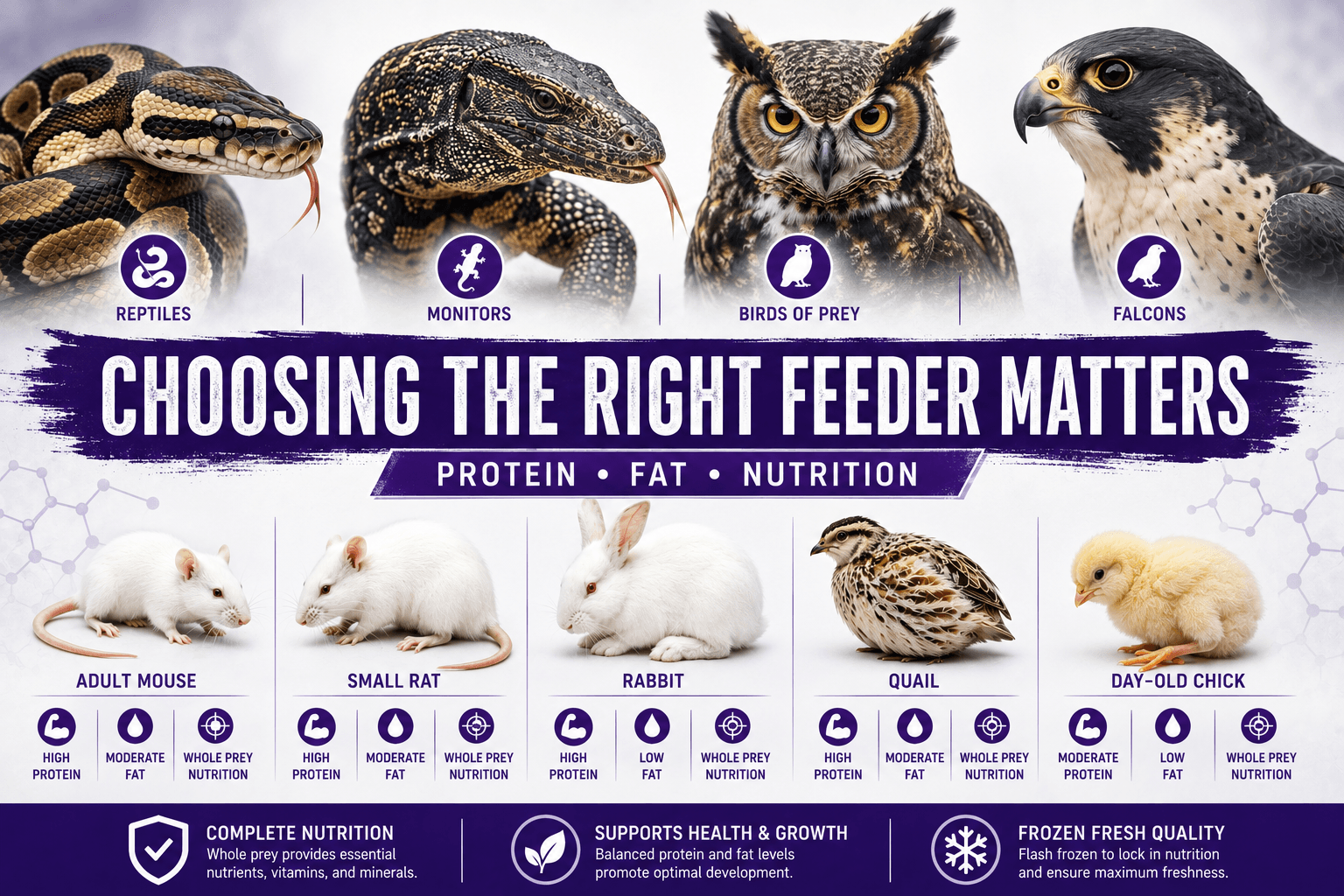
    Mice: Balanced and Versatile Feeders

    Best for: Snakes, small reptiles, amphibians, small mammals, juvenile predators

    Nutritional Profile:

    • Moderate protein
    • Moderate fat
    • Soft bones
    • High moisture content

    Mice are one of the most commonly used feeder animals because they provide a balanced, whole-prey nutrition. Their relatively soft bones make them easy to digest, especially for smaller or younger animals.

    Key advantages:

    • Ideal for juvenile animals
    • Easy to portion and size-match
    • Lower fat than rats
    • Widely used for snake food

    Rats: Higher Protein and Higher Fat

    Best for: Larger snakes, monitors, birds of prey, adult carnivores

    Nutritional Profile:

    • Higher protein than mice
    • Higher fat content
    • Larger organ mass
    • Denser bones

    Frozen Rats are more calorie-dense than mice, making them excellent for large or fast-growing predators. However, because of their fat content, rats should be used strategically rather than exclusively.

    Best practices:

    • Rotate with leaner prey
    • Avoid overuse in sedentary animals
    • Excellent for breeding or recovering animals

    Chicks: Lean and Natural Prey

    Best for: Birds of prey, reptiles, foxes, omnivores

    Nutritional Profile:

    • Lean protein
    • Lower fat
    • Lightweight bones
    • Natural feather content

    Frozen Day Old Chicks are a very natural prey item for many species. They are especially useful for birds and reptiles that consume avian prey in the wild.

    Benefits include:

    • Lower risk of obesity
    • Easy digestion
    • Natural enrichment through feathers and texture

    Quail: Dense Nutrition with Added Variety

    Best for: Raptors, large reptiles, exotic carnivores

    Nutritional Profile:

    • Higher protein than chicks
    • Moderate fat
    • Denser muscle mass
    • More substantial bone structure

    Frozen Quail provide a more nutrient-dense avian option compared to chicks. They are excellent for animals that need higher protein without excessive fat.

    Why choose quail:

    • More filling per feeder
    • Great rotational prey
    • Supports muscle development

    Rabbits: Large, Lean Whole Prey

    Best for: Large snakes, big cats, wolves, foxes, large raptors
    Nutritional Profile:

    • Lean muscle
    • Lower fat than rats
    • Large bone structure
    • High meat-to-organ ratio

    Frozen Rabbits are ideal for large predators that require substantial meals. They offer excellent protein with less fat compared to similarly sized rodents.

    Important notes:

    • Best for experienced keepers
    • Not suitable for small animals
    • Excellent for long feeding intervals

    Comparing Nutritional Characteristics at a Glance

    Why Frozen Feeders Are the Safest Option

    • Eliminate injury risk from live prey
    • Reduce parasite transmission
    • Consistent prey sizing 
    • Easier storage and preserve nutrients when properly frozen
    • Allow precise portion control
    • Safer feeding for reptiles and keepers

    High-quality frozen feeders retain their nutritional value while offering convenience, safety, and consistency.

    Choosing the Right Feeder for Your Animal

    There is no single “best” feeder—the right choice depends on:

    • Species
    • Age
    • Activity level
    • Health status
    • Feeding frequency

    Rotating prey types is one of the best practices for long-term health.

    Final Thoughts

    Understanding the nutritional differences between mice, rats, chicks, quail, and rabbits empowers you to feed smarter, safer, and more effectively. A varied frozen feeder diet supports stronger bones, better muscle development, improved digestion, and overall animal well-being.

    If you’re looking for premium frozen feeders shipped safely and reliably, browse our full selection and feed with confidence.