Choosing the right feeder prey is one of the most important decisions you’ll make for your reptile, bird of prey, or carnivorous animal. At Big Cheese Rodent Factory, we hear this question every day:
Should I feed live prey or frozen feeders?
While both options exist, experienced keepers, breeders, veterinarians, and zoos overwhelmingly prefer frozen feeders for safety, consistency, and animal welfare. Here’s why.
What Are Live Feeders?
Live feeders are prey animals—such as mice, rats, chicks, quail, or rabbits—sold alive and fed directly to predator animals.
Potential Benefits of Live Feeding
- Can trigger a feeding response in reluctant eaters
- Mimics natural hunting behavior
Serious Drawbacks of Live Feeders
- Risk of injury to your animal
- Higher chance of disease and parasites
- Ethical concerns
- More time, effort, and cost
- Unpredictable quality and size
Live feeding should only be used when absolutely necessary and always under close supervision.
What Are Frozen Feeders?
Frozen feeders are humanely euthanized prey animals that are rapidly frozen at peak freshness. Once thawed, they provide the same nutrition—without the risks.
At Big Cheese Rodent Factory, we offer a full range of frozen feeders, including:
- Frozen Mice – ideal for hatchlings, juveniles, and smaller reptiles
- Frozen Rats – perfect for adult snakes and large carnivores
- Frozen Day Old Chicks – popular with birds of prey and large reptiles
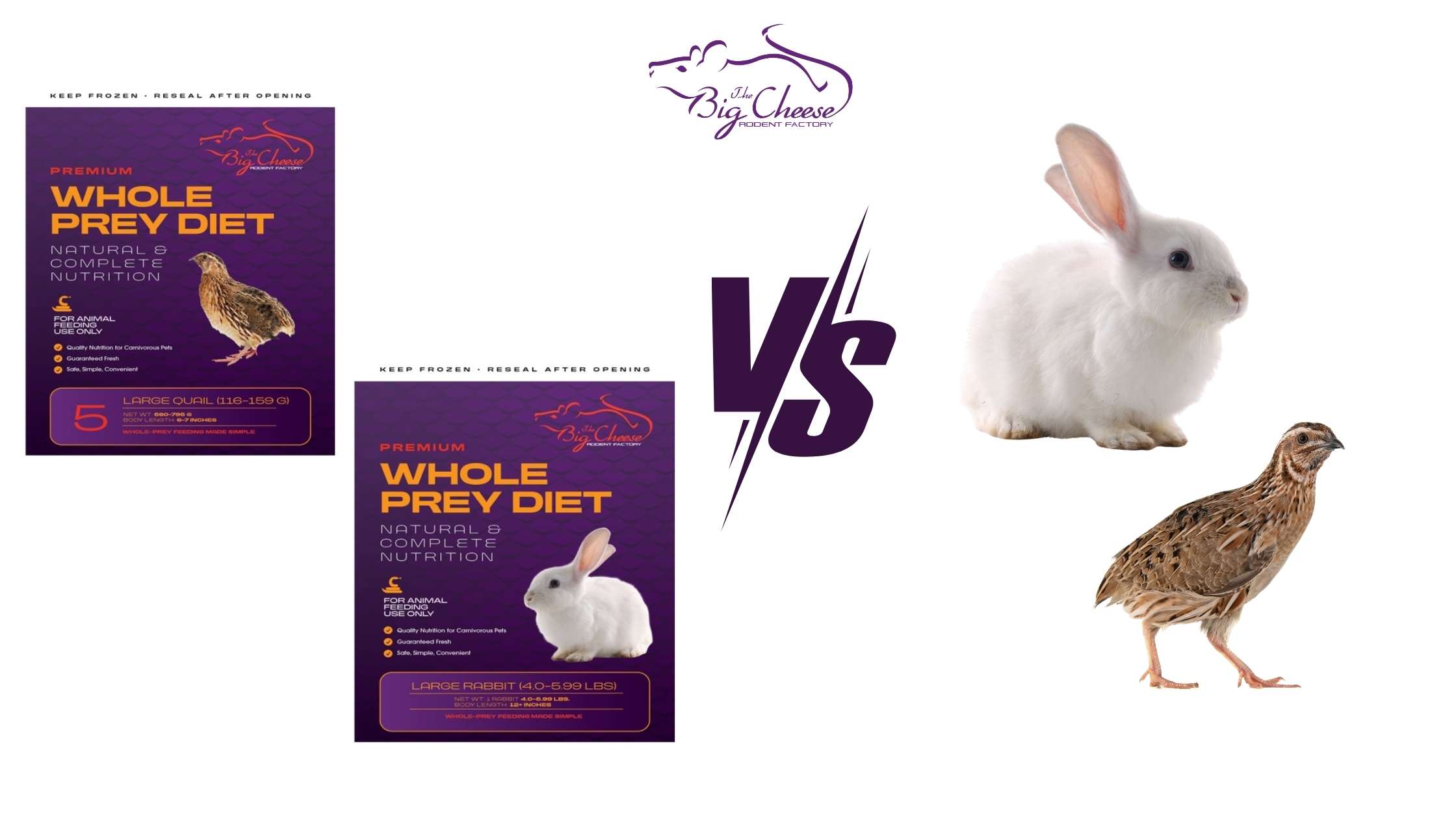
- Frozen Quail – excellent whole-prey nutrition option
- Frozen Rabbits – ideal for large predators
Safety: Why Frozen Feeders Are the Better Choice
Live Feeders Can Seriously Injure Reptiles
Live rodents can and do:
- Bite eyes, tongues, and faces
- Scratch and claw
- Cause infections requiring veterinary care
- Kill stressed or weakened animals
This is why most keepers feeding frozen mice and frozen rats choose pre-killed prey instead of live animals.
Frozen feeders eliminate these risks entirely.
Disease & Parasite Control
Live prey can introduce:
Refrigerator thawing is the safest and most reliable method for thawing frozen feeder rodents.
- External mites
- Internal parasites
- Harmful bacteria such as Salmonella
Frozen feeders—especially those sourced from reputable suppliers like Big Cheese Rodent Factory—help reduce parasite transmission and maintain a cleaner feeding environment.
Nutrition: Are Frozen Feeders as Healthy as Live?
Yes—when handled correctly.
Our frozen feeders are:
- Properly raised and fed
- Consistently sized
- Quickly frozen to lock in nutrients
Whether you’re feeding frozen rats for adult snakes or frozen chicks for raptors, your animals receive reliable, whole-prey nutrition.
Convenience & Storage
1: Ensure prey is fully thawed (no ice crystals inside).
2: Warm to feeding temp as described.
3: Use tongs or gloves to offer prey (avoid hand feeding for safety).
4: Observe the animal eating — if it rejects, do not force. If unused, discard (do not re-refrigerate for later).
Note: Never leave thawed prey inside the enclosure for extended periods.
Storage Rules & Timelines
Live Feeders
- Require cages, food, and water
- Produce odor and noise
- Can escape or die before feeding
- Finding a local/reliable source of live feeders is difficult
Frozen Feeders
- Store safely in your freezer
- No daily care required
- Ideal for bulk buying
- Are constantly available
Hygiene & Safe Handling Tips
- As with any meat product frozen rodents can carry bacteria— always practice safe handling.
- Wash hands thoroughly with soap and hot water before and after handling prey.
- Wear disposable gloves if possible.
- Clean and disinfect any surfaces, bowls, tongs, or containers that contact the prey.
Many customers stock up on bulk frozen mice and rats to reduce costs and ensure consistent availability.
Cost: Frozen Feeders Save Money Long-Term
Frozen feeders are more economical because:
- You can order in bulk
- There’s no loss from feeder deaths
- No maintenance costs
This is especially important for breeders and facilities purchasing frozen rodents and poultry feeders regularly.
Ethical & Humane Considerations
- Humanely euthanized
- Stress-free for prey animals
- Considered best practice by professionals
This is why many zoos and rescues rely on frozen quail, chicks, and rabbits instead of live prey.
What If My Reptile Won’t Eat Frozen Feeders?
Most reptiles can be transitioned successfully.
Helpful tips:
- Thaw prey completely
- Warm to body temperature
- Use feeding tongs for movement
Start with prey similar in size to what your animal is already eating—such as switching from live mice to frozen mice first.
Frozen vs. Live Feeders: The Bottom Line
For most keepers:
Frozen feeders are safer, cleaner, more humane, and more cost-effective.
Live feeding should be the exception—not the rule.
Why Buy Frozen Feeders from Big Cheese Rodent Factory?
When you order from Big Cheese Rodent Factory, you get:
- Premium frozen mice, rats, chicks, quail, and rabbits
- Clear sizing and labeling
- Reliable frozen shipping
- A supplier trusted by hobbyists, breeders, and institutions
You can browse all frozen feeders by Big Cheese Rodent Factory.
Leave a Reply