
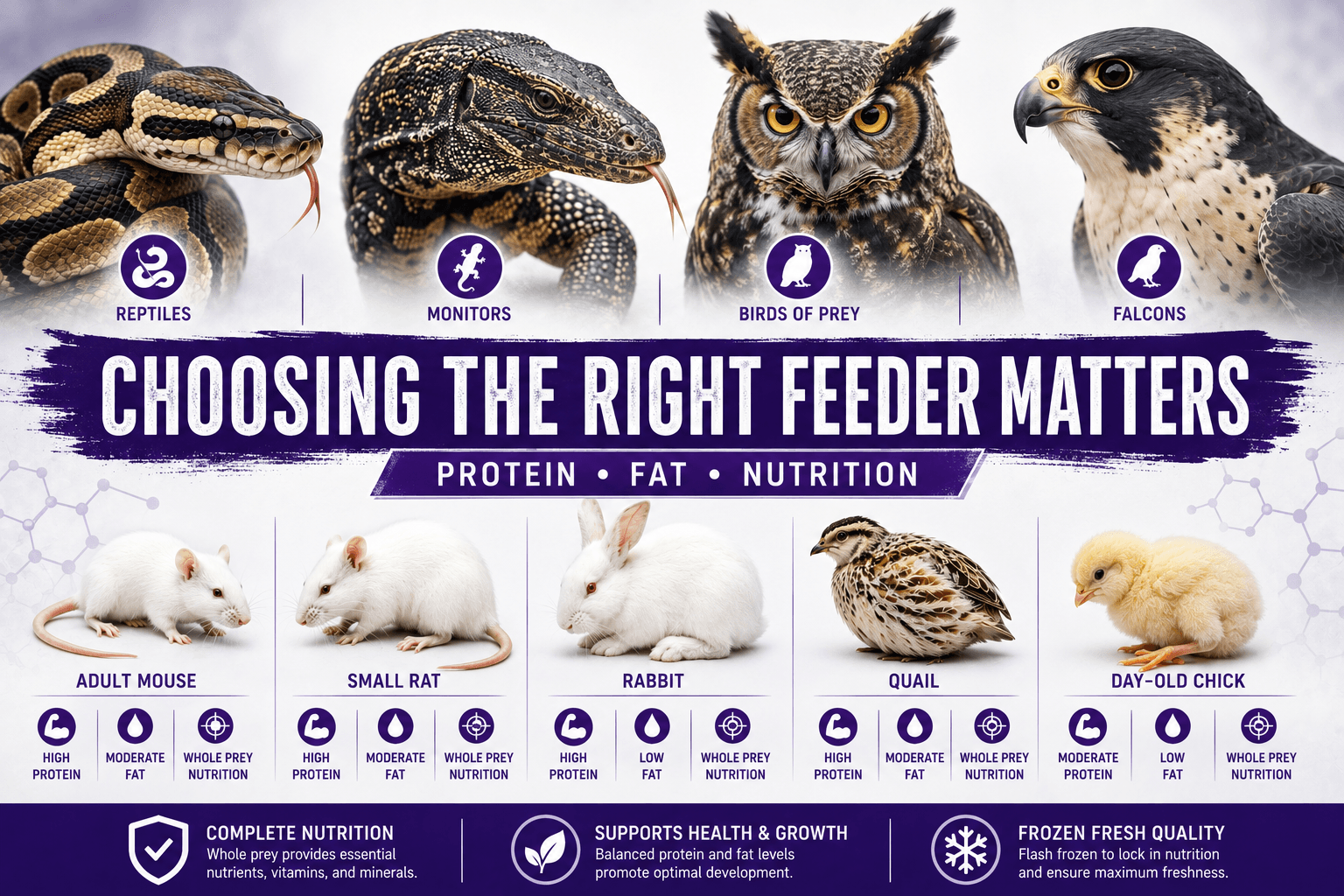
The nutritional content of frozen feeders animals varies based on age, size, and diet, but the values below represent average whole-prey nutrition commonly used by veterinarians, breeders, and zoological facilities. These values are provided for comparison purposes and help guide proper prey selection.
Whole Prey Nutrition: Why Feeder Variety Matters
Different feeder animals provide different nutritional profiles. Some prey types are leaner and higher in protein, while others contain more fat and calories. Rotating whole prey feeders can help provide:
- Balanced protein and fat intake
- Improved dietary variety
- Better weight management
- More species-appropriate nutrition
- Reduced risk of overfeeding high-fat prey
Many experienced reptile keepers rotate feeder mice, feeder rats, quail, chicks, and rabbits depending on the animal’s size, activity level, and nutritional needs.
Feeder Mice – Whole Prey Nutrition
Typical nutritional profile:
- Protein: 16–18%
- Fat: 8–10%
- Moisture: 65–70%
- Calcium: ~1.0%
- Phosphorus: ~0.8%
- Ca:P Ratio: ~1.2:1
Why Mice Are Popular Feeders
Mice like Fuzzy mice, Hopper mice, Small pinky mice, etc., provide one of the most balanced whole prey nutritional profiles available. Their softer bone structure and favorable calcium-to-phosphorus ratio make them ideal for:
- Juvenile snakes
- Small reptiles
- Growing predators
- Hatchlings and smaller carnivores
Feeder mice are commonly used for corn snakes, kingsnakes, milk snakes, young ball pythons, and many small-to-medium reptile species.
Feeder Rats – Whole Prey Nutrition
Typical nutritional profile:
- Protein: 18–20%
- Fat: 10–15%
- Moisture: 60–65%
- Calcium: ~0.9%
- Phosphorus: ~0.7%
- Ca:P Ratio: ~1.3:1
Why Rats Are Commonly Used
Rats contain more calories, muscle mass, and fat than mice, making them excellent for:
- Adult ball pythons
- Boas
- Large constrictors
- Active carnivores
- Breeding animals
Because feeder rats are more calorie-dense, many keepers rotate them with leaner prey items to avoid excessive weight gain in sedentary reptiles.
Day-Old Chicks – Whole Prey Nutrition
Typical nutritional profile:
- Protein: 15–17%
- Fat: 5–7%
- Moisture: 70–75%
- Calcium: ~0.8%
- Phosphorus: ~0.6%
- Ca:P Ratio: ~1.3:1
Benefits of Feeding Chicks
Day-old chicks are lean, highly digestible feeders commonly used for
- Birds of prey
- Large snakes
- Monitor lizards
- Tegus
- Lower-fat feeding programs
Their natural feather and bone composition also provides feeding enrichment for many predator species.
Quail – Whole Prey Nutrition
Typical nutritional profile:
- Protein: 18–22%
- Fat: 6–9%
- Moisture: 65–70%
- Calcium: ~1.1%
- Phosphorus: ~0.9%
- Ca:P Ratio: ~1.2:1
Why Quail Are Excellent Whole Prey Feeders
Frozen Quail provides higher protein density than chicks while maintaining moderate fat levels. They are commonly used for:
- High-energy predators
- Growing reptiles
- Raptors
- Large snakes
- Carnivorous birds
Their higher muscle mass and stronger bone density make quail a nutrient-dense whole prey option.
Rabbits – Whole Prey Nutrition
Typical nutritional profile:
- Protein: 20–22%
- Fat: 4–6%
- Moisture: 65–70%
- Calcium: ~1.2%
- Phosphorus: ~0.9%
- Ca:P Ratio: ~1.3:1
Why Rabbits Are Used for Large Carnivores
Rabbits are one of the leanest high-protein whole prey feeders available. They are ideal for:
- Large constrictors
- Big monitor species
- Large carnivorous mammals
- Breeding facilities
- Lean maintenance diets
Despite their size, rabbits remain relatively low in fat compared to rats, making them useful for muscle maintenance without excessive calorie intake.
Whole Prey Nutritional Comparison Table
| Feeder Type | Protein | Fat | Moisture | Ca:P Ratio | Best For |
| Mice | 16–18% | 8–10% | 65–70% | ~1.2:1 | Juveniles, small predators |
| Rats | 18–20% | 10–15% | 60–65% | ~1.3:1 | Large, active animals |
| Chicks | 15–17% | 5–7% | 70–75% | ~1.3:1 | Lean diets, birds |
| Quail | 18–22% | 6–9% | 65–70% | ~1.2:1 | High-protein feeding |
| Rabbits | 20–22% | 4–6% | 65–70% | ~1.3:1 | Large carnivores |
How to Use This Information
- Rotate prey types to balance fat and protein intake
- Match prey size and nutrition to animal age and activity level
- Avoid overfeeding high-fat prey to sedentary animals
- Use lean prey for maintenance diets
Frozen feeders allow you to control nutrition precisely while delivering complete, whole-prey meals.
Final Thoughts on Whole Prey Nutrition
Different feeder animals offer different nutritional advantages. Frozen feeder mice provide balanced nutrition for smaller predators, rats offer higher calories for larger reptiles, chicks and quail support leaner feeding programs, and rabbits provide high protein with lower fat levels for large carnivores.
Understanding whole prey nutrition helps reptile keepers create safer, more balanced feeding routines that better support long-term animal health and body condition.
Leave a Reply