When feeding reptiles, birds of prey, mammals, or other carnivorous animals, choosing the right feeder animal matters. Different prey species offer different nutritional profiles, fat levels, bone density, and organ content. Understanding these differences helps ensure proper growth, health, and longevity for animals in captivity.
This guide breaks down the nutritional differences between Frozen Mice, Frozen Rats, Frozen day old Chicks, Frozen Quail, and Frozen Rabbits, and explains when each feeder is most appropriate.
Why Nutritional Variety Matters
In the wild, predators eat a diverse diet, not a single prey item repeatedly. Feeding variety helps:
- Prevent nutritional deficiencies
- Balance protein, fat, calcium, and phosphorus
- Reduce obesity and fatty liver disease
- Stimulate natural feeding behaviors
Using premium Frozen Feeders allows reptile keepers to provide dietary variety while avoiding the risks associated with live feeding.
Mice: Balanced and Versatile Feeders
Best for: Snakes, small reptiles, amphibians, small mammals, juvenile predators
Nutritional Profile:
- Moderate protein
- Moderate fat
- Soft bones
- High moisture content
Mice are one of the most commonly used feeder animals because they provide a balanced, whole-prey nutrition. Their relatively soft bones make them easy to digest, especially for smaller or younger animals.
Key advantages:
- Ideal for juvenile animals
- Easy to portion and size-match
- Lower fat than rats
- Widely used for snake food
Rats: Higher Protein and Higher Fat
Best for: Larger snakes, monitors, birds of prey, adult carnivores
Nutritional Profile:
- Higher protein than mice
- Higher fat content
- Larger organ mass
- Denser bones
Frozen Rats are more calorie-dense than mice, making them excellent for large or fast-growing predators. However, because of their fat content, rats should be used strategically rather than exclusively.
Best practices:
- Rotate with leaner prey
- Avoid overuse in sedentary animals
- Excellent for breeding or recovering animals
Chicks: Lean and Natural Prey
Best for: Birds of prey, reptiles, foxes, omnivores
Nutritional Profile:
- Lean protein
- Lower fat
- Lightweight bones
- Natural feather content
Frozen Day Old Chicks are a very natural prey item for many species. They are especially useful for birds and reptiles that consume avian prey in the wild.
Benefits include:
- Lower risk of obesity
- Easy digestion
- Natural enrichment through feathers and texture
Quail: Dense Nutrition with Added Variety
Best for: Raptors, large reptiles, exotic carnivores
Nutritional Profile:
- Higher protein than chicks
- Moderate fat
- Denser muscle mass
- More substantial bone structure
Frozen Quail provide a more nutrient-dense avian option compared to chicks. They are excellent for animals that need higher protein without excessive fat.
Why choose quail:
- More filling per feeder
- Great rotational prey
- Supports muscle development
Rabbits: Large, Lean Whole Prey
Best for: Large snakes, big cats, wolves, foxes, large raptors
Nutritional Profile:
- Lean muscle
- Lower fat than rats
- Large bone structure
- High meat-to-organ ratio
Frozen Rabbits are ideal for large predators that require substantial meals. They offer excellent protein with less fat compared to similarly sized rodents.
Important notes:
- Best for experienced keepers
- Not suitable for small animals
- Excellent for long feeding intervals
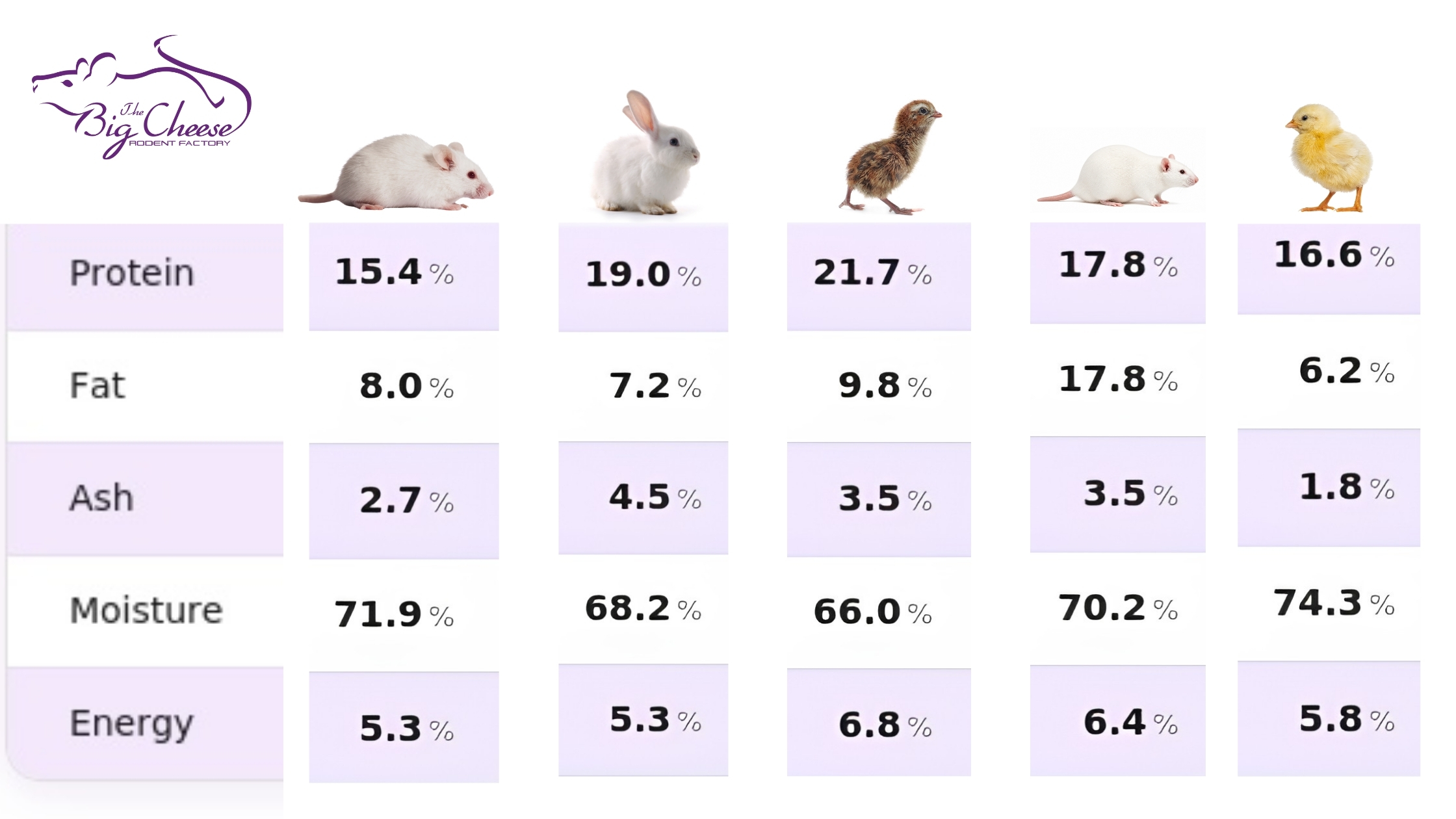
Comparing Nutritional Characteristics at a Glance
Why Frozen Feeders Are the Safest Option
- Eliminate injury risk from live prey
- Reduce parasite transmission
- Consistent prey sizing
- Easier storage and preserve nutrients when properly frozen
- Allow precise portion control
- Safer feeding for reptiles and keepers
High-quality frozen feeders retain their nutritional value while offering convenience, safety, and consistency.
Choosing the Right Feeder for Your Animal
There is no single “best” feeder—the right choice depends on:
- Species
- Age
- Activity level
- Health status
- Feeding frequency
Rotating prey types is one of the best practices for long-term health.
Final Thoughts
Understanding the nutritional differences between mice, rats, chicks, quail, and rabbits empowers you to feed smarter, safer, and more effectively. A varied frozen feeder diet supports stronger bones, better muscle development, improved digestion, and overall animal well-being.
If you’re looking for premium frozen feeders shipped safely and reliably, browse our full selection and feed with confidence.
Leave a Reply